
Go ahead and feel guilty

Jeremiah 7 has the prophet standing at the gate of the Temple. What is your greatest weakness? Do you believe liars? Do you treat others justly? Are you oppressive with others? To many of us allow ourselves to be deceived.

Verse eleven is the scripture that Jesus quoted when He threw the vendors from the Temple grounds at Passover. Jehovah reminds them of what happened to Shiloh because of their unbelief and unfaithfulness. Remember that this was the city where Samuel was raised in the Tabernacle and Eli’s sons were killed in a battle and lost the Arc of the Covenant. Moses gave the Israelites instructions to obey the Lord. All they remember is the sacrificial system.

Have you ever wished that you could just die because of circumstances in your life? Jeremiah 9 tells that the Jews will feel this as they are driven from their homeland. They will wish that they could perish where they are and not have to be displace.

Do you return after you leave? Do you get up when you fall? When you fail Jesus do you return to Him with repentance. God tells Jeremiah that Israel has refused to return to Him and rise when they have fallen. Even the scribes copy the scriptures incorrectly. They pervert His word. Have you ever heard a minister interpret the Bible in a way that does not sound like what was written? I have.

We sometimes are advised to ignore guilt from our sins and not feel any shame. If you want to do it, go ahead. You can make your own choices. You are Americans. You are free. We all feel hopeless and helpless at times. Do not despair. There is salvation in Christ alone.

Jehovah laments over His chosen people in Jeremiah 9. He wants to leave them and not have to listen to their disloyalty or see the terrible things they do to each other. Your tongue can be like a bow and shoot lies at others. I have shot my mouth off before. This is the reason I do not watch reality television. The contestants do not hesitate to say or do whatever it takes to win the prize. Therefore, they are so popular.

 Wisdom is being ignored in our time as it was in Jeremiah’s. We follow the stubbornness of our hearts as they did. We do not have professional mourners now. We have television, movies, and recorded music to cry out our sorrows. Listen to your play list and tell me that I am wrong. We teach our children how to complain about everything. Christians are falling into this trap also. Break the cycle. Teach the children to praise the Lord.

©Copyright 2020 by Charles Kensinger
Stop when God says to.

We continue speaking of Israel returning to Jehovah in Jeremiah chapter four. The Lord asks them to destroy the idols they have been worshiping and be truthful, just, and righteous. What does breaking unplowed land have to do with repentance? Judah is to circumcise their hearts. This is a cutting away of flesh that is of no use to them. It is an act of obedience to God. Plowing the ground symbolizes the change that needs to be made in their lives. The weeds and thorns that are buried by the plow are the sins that they promise to move out of their lives.

If they believe that the disaster that is foretold will come, they will move to the cities for protection. Yahweh’s anger is against them. Do they believe this? They have told God lies in the past. Are they going to keep their word now? Punishment is for something that we have done. He does not apologize for giving us what we deserve. They will cry as a pregnant woman does because of the discomfort of childbirth.

The challenge in Jeremiah 5 is to find one person who is honest. The city will be forgiven for one person who speaks the truth. In this election year, this is something we all desire, people to be honest with us. Swearing by God is no indication of their lack of falsehood. Why should we be forgiven when we and our children deny that God exists. We make science, knowledge, lust, or money our object of worship.

If there is a God, why do people violate His laws without suffering the consequences? That time is coming according to Jeremiah. The Judeans asked that question and believed that He would never punish them. Slowness should not be misinterpreted as apathy. His love continues when we are disciplined. This is for our growth as His children. Do not be one of those that rejects Jehovah to your eternal doom.

The warning in Jeremiah 6 is to flee from Jerusalem before the Babylonian army attacks. Siege ramps will be built. The fighting will be fierce. Before the walls are breeched starvation will set in. Judah will not listen. They are offended by God’s call to recognize Him as their sovereign. Deceitfulness will bring the doom. “They do not know how to blush.” We refer to that as having no conscience.

Sacrifices and burnt offerings mean nothing to the Lord. Mourning for their disbelief is all they can do now. Yahweh’s attempt to refine the Israelites as they would gold, silver, or bronze has failed. They are being rejected.

©Copyright 2020 by Charles Kensinger

The fall of Jerusalem

<iframe width=”727″ height=”409″ src=”https://www.youtube.com/embed/z15RNO9061A&#8221; frameborder=”0″ allow=”accelerometer; autoplay; encrypted-media; gyroscope; picture-in-picture” allowfullscreen></iframe>

The invasion of Jerusalem is recorded again in 2 Kings 24. Babylon causes Judah and King Jehoiakim difficulties along with Aramean, Moabite, and Ammonite raiders. Jehoiachin replaces his father as King and he only lasts three months.  Mattaniah or Zedekiah, his uncle takes over as a puppet king and only the poor are left. After eleven years he rebels against Babylon.

In 2 Kings 25 Babylonia destroys Jerusalem. Nebuchadnezzar spent two years fighting them before they fell. The Israeli army fled in the night with the King and he was taken captive. Zedekiah will be the last monarch until Jesus returns as a earthly Lord of the New Jerusalem. Once again, the influential and wealthy were taken away. The Babylonians left Gedaliah as the ruler in what is left of Judah. He is murdered by some of his own people. We read the last about Jehoiachin before we start the reading about the Babylonian exile. One last prophet wrote during this period. We look at Joel, before moving to the post Kingdom history.

2 Chronicles 36 tells about the succession of Jehoahaz after Josiah. Jehoiakim, replaces him when the Pharaoh deposes him. Jehoiakim is taken from the throne to Babylon by Nebuchadnezzar. Next is eighteen-year-old Jehoiachin who also is taken to Babylon. Zedekiah is the last King of Judah and Cyrus of Persia is mentioned as rebuilding the Temple in Jerusalem.

©Copyright 2020 by Charles Kensinger

Jeremiah begins

Jeremiah has a prophecy for Josiah, King of Judah, in chapter one of his book. This chapter contains verse five which is used to show that Jehovah knows each of us before we are in our mother’s wombs. The future prophet tells the Lord that he is too young. He is told that he will be told what to say. We have the first of his visions described to us. It is a boiling pot. It is north of Judah and will pour out destruction and death on Jerusalem.

A proclamation is given to Jerusalem in Jeremiah 2. Israel once loved Jehovah as a bride loves her groom. What was wrong with Him that made the Jews reject Him? They did not follow Him. They had no good reason for that. The Lord is prosecuting them for alienation of affection. The spring of living water is what Jesus told the woman at the well that He was.

The bride has become a prostitute. She was like a vine planted in the ground. That vine became wild. They do not want to be tamed. It is the same with each of us. We make our choice of whether to follow Christ or not. It does not matter what Yahweh does for some of us. There are those that will always run away from God.

Divorce is the first topic in Jeremiah chapter three. The Prophet draws a connection between a man returning to his divorced wife and the Israelites trying to return to Jehovah. Faithless is a description for God’s people. Adultery is again used to describe the idolatry the has been practiced throughout the promised land. The northern kingdom of Israel has been divorced and Judah is said to be less righteous than he sister.

All that He requires for forgiveness is for them to repent and return to Him. This means forsaking their foreign lovers and worshiping only the true God, Yahweh. The prediction of the loss of the Ark of the Covenant is given here. It will not be missed or remembered, and another will never be made. There goes the story line for “The Raiders of the Lost Ark.” Israel and Judah will someday return to their land.

©Copyright 2020 by Charles Kensinger

Zephaniah condemns Judah

When Josiah was King of Judah the prophet Zephaniah began to mister to his people. In chapter one he spoke of the Day of the Lord. This is a day of calamity. Men and animals will be wiped out. This statement leads me to believe it goes beyond the day when Judah and Jerusalem fell to the Babylonians. Another period is predicted. In His jealousy the entire earth and everyone that lives on it will be consumed. But don’t fret. That is not the final word.

What about those Israelites that did not reject Yahweh but continued to be faithful to Him? Zephaniah 2 tells them to be humble and be righteous. Judgment of Judah and other nations is also spelled out. The cities in Philistia will suffer. Moab and Ammon will be destroyed for their abuse of Israel. Cush and Assyria will be put to the sword for their rebellion as well. The pride of all these lands will ultimately destroy them.

Jerusalem is condemned in Zephaniah chapter three and judgment of the city is discussed. The Lord’s righteousness is contrasted with the vileness of the “Holy” city. The numerous warnings by the prophets, the conquest of Samaria and Israel, and the example of Judah’s good Kings has no effect on most of the inhabitants.

There will be a remnant that will survive and return to the Promised Land. Israel must survive this exile to have the Messiah be born as the prophecy reminds us. These people will include those who are righteous. Fortunes will be restored but the established festivals will be lost.

©Copyright 2020 by Charles Kensinger

Josiah the good king

Eight-year-old Josiah becomes King when Amon, his father, dies in 2 Kings 22.  Josiah follows David’s example and follows Jehovah. A renovation of the temple is attempted. Funds have been collected and the work is done. During the work they discover the Book of the Law in the Temple. The King recognizes that the Israelites have failed to follow these laws. Amon’s actions will not prevent the destruction of Jerusalem and Judah. He will be allowed to pass before this happens.

As in second Chronicles, King Josiah has the Law read to everyone at Jerusalem in 2 Kings 23. The Covenant with Jehovah is renewed, and the Temple is cleansed of the desecration that had been brought in. Even male prostitutes were living in the sacred building. Altars and worship sites all over Judah are destroyed. We are reminded of the proclamation of the Man of God from earlier in the scripture. Once again, Yahweh’s messenger has been proven accurate.

The Passover celebration we read of previously is again explained. The death of Josiah at the hands of Pharaoh Necho is confirmed. Jehoahaz follows as King of Judah but does not last and is replaced by his uncle Eliakim. Pharaoh changes his name to Jehoiakim as the next monarch. Neither of Josiah’s successors followed him as a good King.

In Josiah’s sixteenth year 2 Chronicles 34 tells us he began to follow Yahweh. As a twenty-year old Josiah of Judah purges Judah of the worship places for idols. In his twenty-six year he rebuilds the Temple and the law is recovered. As we read in 2 Kings 22 they go to a prophetess of the Lord and ask what Yahweh’s will is. She is the one that tells Josiah that he will not live to see the punishment of Judah. Here we are told that the King has the Law read to the people. The covenant is renewed and all promise to follow God’s word. For the rest of Josiah’s life, the Israelites obeyed the King and the Lord.

We continue with Josiah in 2 Chronicles 35. The Ark of the Covenant is returned to the Temple and the Passover is celebrated. The Passover feast is described as like what was done at the time of Samuel. None of the kings had celebrated like this. We are told here of Josiah disobeying Jehovah and fighting King Necho of Egypt. He is killed in the battle. It is the punishment that Necho predicted.

©Copyright 2020 by Charles Kensinger

Jonah’s wish comes true

Yesterday we read of the destruction of Samaria and the northern kingdom of Israel by Assyria. In Nahum 1 we read of the revenge of Jehovah on the city of Nineveh. The Lord is good and is there when we need Him. He is the one that should seek to punish those who harm His followers. This prophecy against Judah’s enemy will take time to be fulfilled. This freedom from distress is guaranteed. Remember why Jonah did not want to preach to the Ninevites. He did not want them forgiven. Now they will be punished.

Nahum warns the residents of Assyria in chapter two. What happens when the shoe is on the other foot? Nineveh will be destroyed just as Samaria was. People today do not believe that Jehovah will punish them because of their sin. The prophet shows us that the Ninevites thought they would never be punished.

Nineveh is described as a city of blood with many bodies in the streets in Nahum 3. Defeat of Assyria is predicted and described in detail. They are described as a prostitute just as Israel was in other books of prophecy. Who will mourn this great nation that conquered many others? What happened to their enemies will catch up with the Assyrians. They will lose their homeland in the future.

©Copyright 2020 by Charles Kensinger

Hezekiah’s illness

We read yesterday in Isaiah that the Prophet told the King to prepare for his end. 2 Kings 20 tells us about Hezekiah’s illness and this same incident. The shadow on the sun dial is the indicator of Jehovah’s fulfillment of this promise of healing. If Hezekiah had allowed himself to die, would the conquest of Jerusalem by Babylon have been delayed or possibly never happened? While the King revealed too much to the future enemy, it likely did not alter history in a significant manner.

Twelve-year-old Manasseh becomes King in 2 Kings chapter 21. Manasseh is one of the evil kings of Judah unlike his father Hezekiah. Baal, Asherah, the stars, and other idols were worshiped by him. He even sacrificed his own son in fire. He desecrated Yahweh’s Temple. His sins are the reason that Jerusalem and Judah will be defeated and carried away.

His son Amon succeeds him and is not any better than dear old Dad. He was assassinated by his own officials. The people executed his murderers and place his son Josiah on the throne.

©Copyright 2020 by Charles Kensinger

Personal salvation, not corporate

Jehovah would perform these miracles for Israel and the surrounding nations feared them. Isaiah 64 reminds us that there was no other god. How can we be saved when we continue to disobey the Lord? Our best is like a bunch of dirty rags. Verse eight calls us the clay and Jehovah the potter.

Yahweh tells us in Isaiah 65 about those that rejected Him. He let them know that He was available to them. His instructions would have benefited them. They chose not to follow the Lord. I am one of those who eat the flesh of pigs. I must admit I like bacon, ham, pork chops, and ribs. I try not to claim holiness that I do not have on my own. We will receive the payment for what we have done.

Some say that Jehovah’s justice is not individual. It is based on our being in a certain group. Jew or gentile, black or white, American, or foreign are a few of these designations. Verses eight and nine tell that those that accept Jesus will be rescued, while those who refuse will suffer for their own decisions. There is a choice to be made. It is yours. The new name you can have is Christian which means you strive to be a little Christ. It is not like the names I began with. If you want it, He will give it to you. It cannot be earned or given at birth.

We can look forward to a new heaven and earth. It will be a place where there will be no sorrow, crying, or mourning. Destruction and harm will be avoided. We are not there yet. Some of us will never reach that promised land, because we have not followed Jehovah and His Son, Jesus, the Messiah (Christ).

There is no place that we can build a house for the Lord, that He did not make is voice in Isaiah 66. This chapter concludes the book. We will look at the other books of prophecy and the stories that tell of the destruction of Judah and Jerusalem. Giving to God had become lip service. The worshipers did not follow Jehovah’s law.

Once again Isaiah prophesies that Israel will be restored with the remnant. Those that have disobeyed will suffer, but the faithful will be rewarded.

©Copyright 2020 by Charles Kensinger

The armor of God

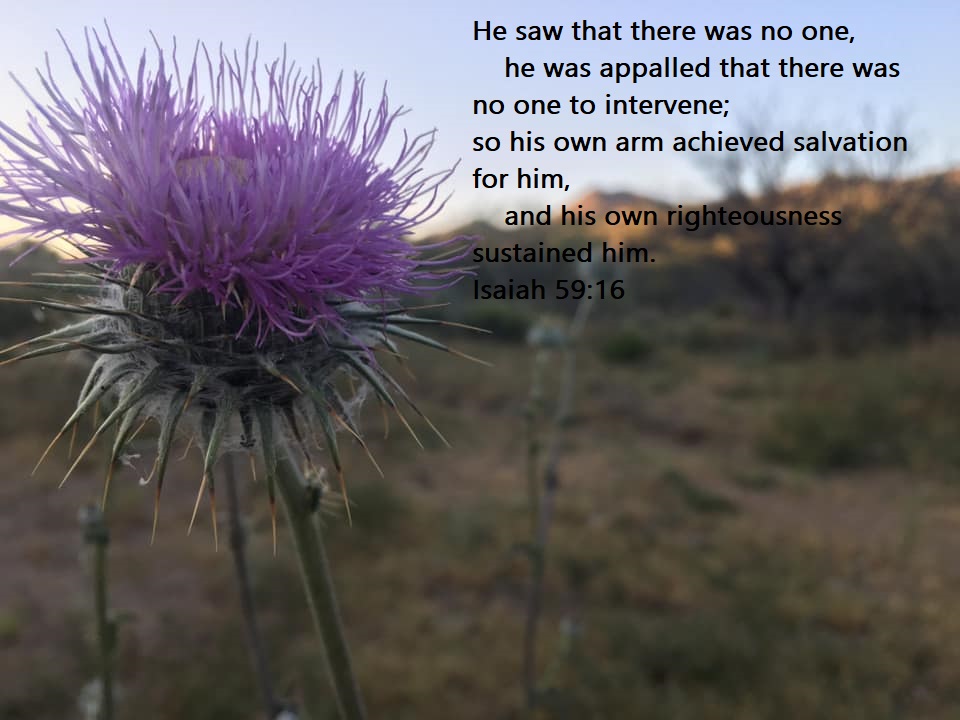
Jehovah knows how to express His desire to save both Israel and us and He tells us in Isaiah 59. He speaks of empty arguments and lies and likens those who do them to vipers and spiders. They are not close to justice, righteousness, or light.

Messianic prophecy begins in verse sixteen. Verse seventeen is like the whole armor of God that Paul wrote of. People in the west will respect the Lord and those in the east will revere Him. The redeemer will come to Israel. His spirit will be with them and their children forever.

Israel will regain the glory it once held according to Isaiah 60. The light of the Lord will come from Zion and spread through the entire world. Agriculture, traffic, trade, and worship will continue in the land, when it is restored by Yahweh. The nation that will not serve Him will perish. He will be the Savior. These will be accomplished quickly.

The Lord’s Spirit is on Israel in Isaiah 61. They will proclaim freedom and release for the prisoners and the year of the Lord and God’s vengeance on the evil ones. God’s vengeance and favor will be distributed according to our previous actions. Oaks of righteousness are planted by Jehovah. The oak tree is strong and withstands the wind and rain. Their righteousness comes from Jesus, just as ours does.

The first born in Israel was promised a double portion of the inheritance. The Israelites will receive the double portion. The new covenant will last forever. All nations will praise them.

Israel is called the Lord’s delight is in her and married in Isaiah 62. Just as Jesus taught His followers that they would become His bride, Israel will be the wife of Jehovah. This is prophetic scripture that speaks of the Savior, a renewed Jerusalem, and people who are holy. There are a lot of similarities to the Lord’s teaching in the New Testament.

Yahweh will have a Day of Vengeance as is written in Isaiah 63. Edom is listed. The example used is that of one treading the grapes to make wine. No one is there to help Him in His judgment. He had to accomplish salvation on His own. Their rebellion continues, much as Israel’s has. We are talking of the same God that led them through the Red Sea, guided them through the dessert, and through the Jordan River into the promised land.

©Copyright 2020 by Charles Kensinger