
The light of the world

Numbers 8 2

Numbers 8 talks about something that might seem insignificant to us.  The lampstands in the Tabernacle.  Why was this important?  Jesus tells us He is the light of the world.  Light was precious to the Israelites.   Lamps or candles were used inside and after the sunset as well as on cloudy or dreary days.  Most of the time, the wilderness was hot and bright.  At night it was cold and scary.  They needed lamps inside, and therefore this stand is very important.

Another strange custom to us is the purification of the Levites.  This tribe was to be the priests that served in the Tabernacle and later the Temple.  This custom could be likened to the ordination of ministers in most Christian churches today.  An ordinary human is dedicated by the assembly to be a special servant of the people and to God.

Two years have now passed in Numbers 9 since the Israelites left Egypt.  It is the second celebration of the Passover.  The question of some of the congregation observing the feast came about when they were unclean due to a dead body.  God gave them the instruction to cleanse themselves per the law and present the sacrifices on the fourteenth of the second month.

The pillar of cloud and fire is discussed at length here.  The obedience of the Children of Israel to stay put or move depending on these signs is specifically mentioned.  This visible sign of God’s will could be followed.  Obedience to other instructions was not kept.

Trumpets begin Numbers chapter ten.  They were used to summon the people, just the leaders or announce the time to move out of camp.  After this, we read about the Israelites breaking camp after almost two years and finally making their way to Canaan.

The Israelites moved out in the order that God had instructed them.  The thousands of people and animals took a while to get moving.  The tents were taken down, including the Tabernacle of meeting.

©Copyright 2020 by Charles Kensinger
The tribal offerings

Numbers 7 seems a lot like the Twelve Days of Christmas.   “His offering was one silver plate weighing a hundred and thirty shekels and one silver sprinkling bowl weighing seventy shekels, both according to the sanctuary shekel, each filled with the finest flour mixed with olive oil as a grain offering; 80 one gold dish weighing ten shekels, filled with incense; 81 one young bull, one ram, and one male lamb a year old for a burnt offering; 82 one male goat for a sin offering; 83 and two oxen, five rams, five male goats and five male lambs a year old to be sacrificed as a fellowship offering.” This is repeated twelve times for each of the tribes of Israel.

Repetition is the sincerest form of flattery.  They are not flattering each other with this.  The honor is extended to Jehovah for leading them from Egypt into the land of Canaan.

©Copyright 2020 by Charles Kensinger

Nazarite vows and requirements

We begin Numbers 5 with a discussion of physical cleanliness.  Restitution for theft is then taken up.  Punishment for wrongdoing isn’t all God commands.  He also declares that we should treat each other fairly.  Returning what does not belong to us and adding extra to it isn’t a new idea.

Sacrifices for jealousy are explained.  Where is the sacrifice and punishment for the man who is unfaithful to his wife?  The proof that this is a male-dominated society is shown in many of these teachings.

The Nazarite vow is described in Numbers 6.  It is a vow that is made for special service to God.  John the Baptist in the New Testament is one example.  Samson in the book of Judges is another.  Nazarites must avoid wine or any grape products even raisins or the skin or seeds of the grape.  Nothing fermented can be drank and the hair must not be cut for the duration of the vow.

Being around a dead body or cutting the hair resets the time of the agreement.  The number of days begins again after the cleansing ceremony is performed.  The hair is the symbol of the commitment made to God, much as the wedding ring represents the marriage covenant.

The chapter ends with the proper blessing for the priests to give to the people.  “The Lord bless you and keep you; the Lord make his face shine on you and be gracious to you; the Lord turn his face toward you and give you peace.”

©Copyright 2020 by Charles Kensinger
The census of the Levites

DCIM100MEDIA

The responsibilities of the Levites are enumerated again in Numbers 3.  The worship through offerings and sacrifices would be difficult.  The moving of the sanctuary would require a lot of people.  They also served as the leadership of the Israelites at this time, before a King was appointed.

The dedication of the first born and the Levites who took their place is also mentioned here.

Numbers 4 specifies the divisions of the Levites and their occupations in the transportation and worship services of the children of Israel.  Once again Jehovah is specific in what He wanted each Levite to do.  The count was also made as the Lord requested.

©Copyright 2020 by Charles Kensinger

It is time for you to be counted

Numbers 1 tells us that a year has passed since the Lord led the Israelites from Egypt. It is time to begin the preparations for moving into Canaan and claiming it for their own. Jehovah has given it to them. Why do the men of an age to fight have to be counted? Couldn’t they defeat anyone with God’s help?

Over six hundred thousand men were in the eleven tribes. The Levites were not counted. Their job was to serve in the tabernacle, not the army. The chapter ends with the statement that the people obeyed what they were told to do. At least for now.

Numbers 2 tells how the tribes were to camp around the tent of meeting and break camp when it was time to move towards the promised land.  God is specific to His children currently.  Why do we believe He will not tell us how what, when and where He wants us to act on His behalf?

God will tell you what He needs you to do and say.  He will deal with exactitude and not generalities.  God wants every one of His children to know whom He wants them to marry, where to work or attend church.  Life is to be lived by the will of God, not by accident.  Why do we not believe this?

©Copyright 2020 by Charles Kensinger

Obedience, consequences, and forgiveness

Leviticus 26 reminds the Israelites that the blessings of God are dependent on their obedience to his statutes and laws.  No one will be able to run them from their land.  They will never face famine or drought.  We know they did.  We also have a record of the fact that they did not follow Jehovah’s rules.

The promises for good from God are only surpassed by the condemnation that will come if they do not follow His path.  As you read this chapter, note the terrible things that are going to happen, when they do not seek Yahweh.  As we trek through the rest of the scriptures, you will see these fulfilled.  The Sabbath rest for the land will be provided by God one way or the other.

With all of this, He still promises forgiveness when they turn back to Him.  That is the promise that we have, today.

As we complete the book of Leviticus with chapter twenty-seven, we see that the Lord will accept things dedicated to Him.   He even sets the value of those people and animals which might need to be redeemed.  The emphasis is on the holiness of those dedicated to Yahweh.  That holiness makes them priceless.

As Christians, we must commit ourselves to the Lord.  Our holiness comes from Christ, not anything we have done.  Just as being the property of Jehovah made an ordinary animal holy and of value, our worth increases through our relationship with Him.

One-tenth of all the products that the land gives the Israelites are God’s.  This is where our modern tithe comes from.  One-tenth seems large if we don’t want to honor God with it.  When we love the Lord, that seems smaller than He deserves.

©Copyright 2020 by Charles Kensinger

The year of Jubilee

Leviticus 24 is quite unusual.  We have instructions for the Show Bread that is to be on the altar every day.  Then a story about stoning a blasphemer is told.  Pomp and circumstance at its best, don’t you think?  Ceremony and discipline.  Jehovah wishes to be honored and respected.  Insulting His name is not permitted.  The entire assembly had to hit him with rocks. That is what stoning is. Over a million people threw a rock at this guy.  How big was that pile when they were done?  Every time they passed back that way, I am sure the story was told until they were sick of hearing about The Blasphemer.  Unfortunately, I don’t think they learned the lesson very well.

Crop rotation is what modern agronomists teach today, but in Leviticus 25 Jehovah instructed the Hebrews to give the land a rest every seventh year.  They never did it.

To compound things, even more, they were to observe a Year of Jubilee every fifty years.  During this fiftieth year celebration, all the property in the promised land was to be given back to those families that it was given to at the time the land was settled.  When selling property, it was to be remembered that God owned all the land and that the Israelites were given it to farm and raise their families on.

Another interesting item in VSS. 35-38 is that Jews were not to charge other Jew’s interest on loans.  If a fellow Israelite needed to borrow money, it was to be loaned without interest.  What If Christians did this today?  The restriction went further in vs. 37.  They were not to sell food at a profit to each other.  I’m sure that is another command that was not heeded.

The chapter ends with a reminder that the Israelites are to be God’s servants.  Followers of Christ have the same commitment.  We are to be Yahweh’s servants by serving others as Christ did.

©Copyright 2020 by Charles Kensinger

Happy holy days

Leviticus chapter 22 emphasizes the importance of cleanliness on the part of the priests.  Death is the reward for performing their duties while unclean.  The life of those who minister to the people and to Jehovah have additional restrictions.  This continues today, but many in Christian service rebel against the high standards they are held to.  The call to ministry is special and not to be taken lightly.

In many of the verses, God says, “I am the Lord.”  This is literally translated, “I am that I am.”  This is the name that we transliterate as Jehovah or Yahweh.  It can be stated another way.  “I exist because I exist.”  He is the Creator, not a creation.  Throughout the scriptures, this is stated in various manners.  God is God and there are no others.

The Sabbath is one of the festivals mentioned in Leviticus 23.  These are holidays.  They are days of rest and no work is to be done.  A minimum of one day a week is to be celebrated.  The Passover is the next one mentioned with the Feast of Unleavened bread.  The Festival of First Fruits is to celebrate the beginning of the harvest.

The Festival of Weeks, Trumpets, and Tabernacles, as well as the Day of Atonement, are all times to stop and think about what God has done for them.  We have lost the idea of rest on holidays and focusing on God.  Each holiday has its own regulations just as each of our holidays is celebrated for different reasons.

©Copyright 2020 by Charles Kensinger

Capital punishment

Leviticus 20 23

Leviticus 19 commands us to be Holy just as Yahweh is.  What is meant by this term?  To be holy means to be separate or different from what is normal.  You can’t be holy when you act like everyone else.
Some of the Ten Commandments and other laws are repeated.  God wants the Israelites to remember these and continues to remind them and us of what is expected.

Generosity is encouraged by not harvesting a second or third time in the fields and vineyards.  The process of allowing the poor to go onto other’s property to glean or harvest what was left has many valuable aspects.  They work for what they receive.  The pride of work is maintained even if they have no crops of their own to gather.  Today’s harvesting equipment does not contribute to this type of generosity.

Kindness is also demanded.  Many other laws are spoken of here.  Horticultural laws, piercing, tattoos, and spirituality are dealt with in this chapter.  All the law is to be obeyed.  This makes it impossible.  The number of regulations causes increased difficulty in remembering and obeying everything God commands.

The penalties for sin are specified in Leviticus 20.  Capital crimes are sacrificing children to foreign gods, bestiality, homosexuality, dishonoring your parents and committing adultery.

Other sins mean separation from the community, being childless or other forms of discipline.  The purpose of these punishments is to make the Israelites different from others who used to live in the land they will inhabit.

Today we want to conform.  Being as much like others as possible is the goal.  As Christians, we also are to be holy, separate or different.  We don’t just separate ourselves physically or be different in ways that involve dress or actions just to be different.  There are reasons not to follow the practices of the world at large.

Sin is to be shunned in many forms.  Gossip, slander, and backbiting are ways that we follow the world and not Jehovah.  Questionable business practices are other ways.  While following the law does not save us, not obeying God makes us look like everyone else.  This is not being Holy like God.

Uncleanness is dealt with again in Leviticus 21.  Touching dead bodies other than immediate family members is restricted to the priests.  Shaving hair and beards are restricted.  Marriage practices are also covered.  Disgrace by children is also specified along with punishment for the children.

The last part of the chapter seems to make God out to be prejudiced against those with handicaps.  Yahweh restricts their approaching the altar of sacrifice.  He does not cut them off completely or demand their execution as for those who willfully sin.  There is a difference in the way these groups are to be dealt with.

©Copyright 2020 by Charles Kensinger

What is a scape goat?

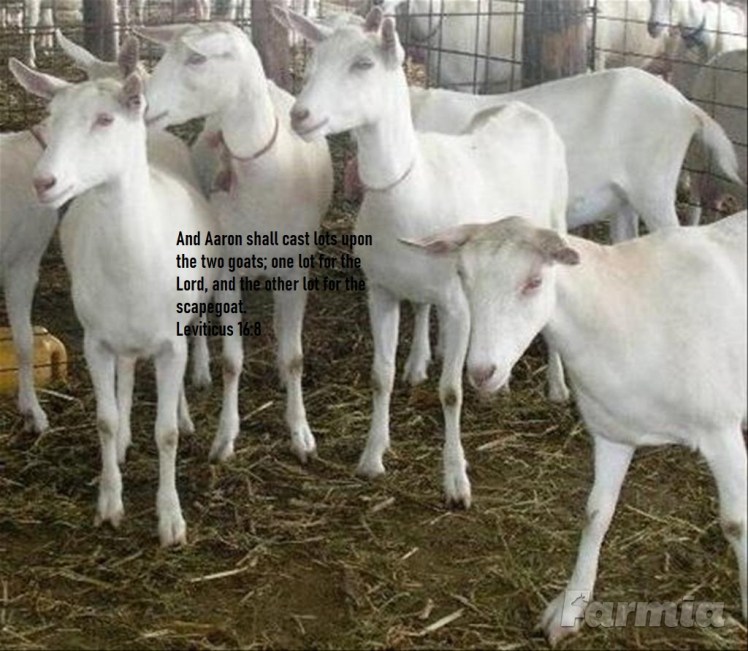
Leviticus 16 8

The teaching of the scape goat in Leviticus 16 is very interesting.  In addition to having a burnt offering and sacrifice of a goat and a bull before God there is another goat that is left alive.  The sins of all the people are to be placed on the head of the goat.  Just as our sins were placed on Jesus at the cross, the live goat takes away their sins when it is released and runs away. The New Testament tells us that Jesus is both this scape goat and the ultimate perfect Passover lamb that is sacrifice once and for all time.

Leviticus 17 adds more restrictions to the sacrifices that are being offered.  The ban on offerings to idols is reiterated.  Eating meat with the blood still in it is again mentioned.  God does not want us eating or drinking any blood.  The vampire legends probably stem from this and pagan religions that have practiced it since these early times.  The life is in the blood.  There is no forgiveness of sins without the shedding of blood. This was accomplished by Jesus’ death on the cross.

Sex is talked about in Leviticus 18.  Restrictions on sex with relatives is often thought to be because of the possibility of diseases and mutations that can be caused by this.  Daughters-in-law and wives of fathers and sons would not be included in these medical areas.

Homosexuality and bestiality are restricted.  This has not changed in the view of Jehovah in these thousands of years.  The law is ignored because we do not want to listen to anyone who tries to keep us from doing everything we want to do.  Bestiality, incest, and homosexuality are restricted.  Christians who want to follow God’s desires will respect this. Sexual sin is one of this century’s greatest problems. We do not want to restrict any action that we view as pleasurable. We do not consider the effects of these sinful actions. Yahweh is not a party pooper. These instructions are like the ones we give our children not to play in the street or light matches without our supervision. These laws are for our own protection.

©Copyright 2020 by Charles Kensinger