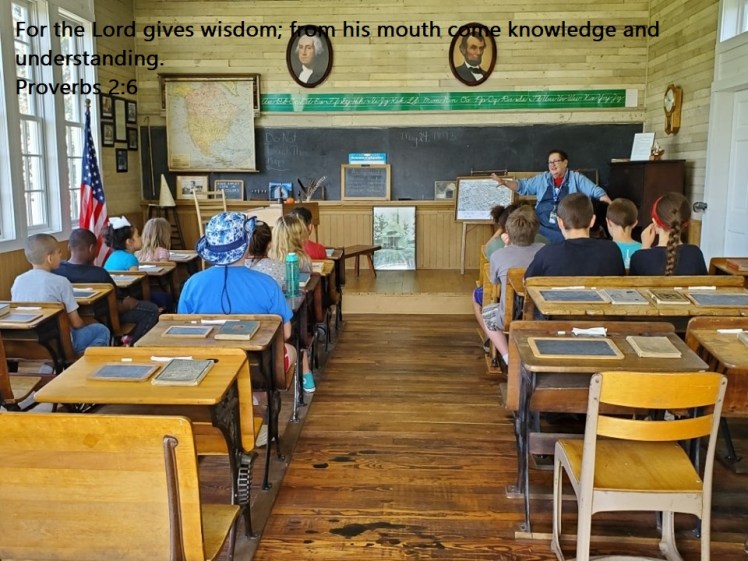
The wisdom of the proverbs

Proverbs 2 6A proverb is a wise saying and as we begin in Proverbs 1, we see that Solomon, the son of David, King of Israel is our author or editor. The purpose of this book is to gain wisdom and insight and receive instruction in prudent behavior. We can all learn something from this book, no matter our age or intelligence level.

Many things are covered in this book and like much of the Bible, there is a lot of repetition. As we read, I will attempt to not repeat, and each day try to find some new morsels for you to digest. The first being, that the respect of the Lord is the beginning of knowledge. Following that is the instruction that it is foolish to despise wisdom and instruction.

Avoid those who attempt to draw you into actions that do not seem proper or fair to others. Wisdom wants us to follow in its footsteps and learn to be intelligent and caring. Following this route will lead to safety and contentment. When we are young, that often is not exciting enough for us.

What is the fear of the Lord? Proverbs chapter 2 says that wisdom will enable us to understand that it is not fearing what He will do, but respecting His abilities, power, and judgment. What is correct, just, and fair? Some call this common sense, others believe they act with fairness, while friends and family view them as cruel.

Have you made decisions in your life that you regret today? Have relationships gone bad, jobs turned out to be the wrong position for you, or have you alienated family or friends by incorrect choices? Wisdom from Jehovah can prevent these troubles.

When we are young, we often ignore the advice of parents and older friends and family. Proverbs 3 begins with King Solomon advising his son to listen to these words of wisdom that he wishes to pass along. Love and faithfulness should be our practice all our lives. Verses five and six are two to commit to memory if you do not already know them.

In this format, every group of two verses completes a central idea. Look at a few of these. Pride, wealth, and discipline are these ideas. The chapter continues with a description of what can be gained with wisdom and understanding. It concludes with another series of paired comments that illustrate how a wise individual will treat others. A fool is the opposite of a wise person.

©Copyright 2020 by Charles Kensinger

I call out with all my heart

Verse 89 of the 119th Psalm begins the Lamedh section. Remember that this is the Hebrew letter with which this stanza in the song begins. When he says that the word of God is eternal, we can believe it today. This song was written around 3,000 years ago. Very few writings from that time in history exist today. Is the law of Yahweh your delight? Are you saved because you are a child of God? Do you realize as the writer does that perfection has a limit, but the creator does not?

“Oh, how I love your law,” begins with Mem and we should meditate on it as the psalmist does. You wiser than your enemies because you follow the commands of our Lord? Do you know more than your teachers and the elders? If you do, be careful. Don’t flaunt this knowledge. Sometimes I forget this advice and others think I am showing off because I can answer quickly what God says about a subject. This is one of the evil paths that we need to avoid.

A lamp unto my feet and a light for my path is something I need every day. The stanza beginning with Nun Starts this way. I do not believe in taking oaths for most things. The oath of office that we use for police officers, our president, and other officials needs to mean something to each of us. I stand on God’s laws even if I have not taken an oath on them. If you have ever been sworn in for a court case, you have taken an oath to tell the truth swearing on the word of God.

Double-minded people are discussed beginning in verse 113 which begins the verses which start with the letter Samekh. We read here that Yahweh is our Refuge and shield. Being sustained by Him is one of the many promises we can depend on. These decrees are full of those promises. Does your flesh tremble with respect for Him?

Ayin in verse 121 precedes the declaration that our singer has done what is righteous and just. He again is looking for salvation and is looking for promises that have been made. The love of God surpasses anything we see from men. Being a servant was what Jesus did when He came to this planet. Jehovah seems slow to act. He has His own timing. Do not believe that He is slow. He is always on time.

Light is a common term used in the scriptures to designate the clarity of Yahweh’s teaching. In the section starting with the letter Pe we read this and that the words are simple. The words mercy and love are often difficult to understand. Mercy and love are there to prevent sin from ruling over us. It is the oppression of humanity that draws us away from our Lord.

Do you ever question God? I have. Job did. All three of us are wrong when we do that. Verses 137 to 144 start with a Tsadhe. The first verse tells us that He is righteous, and His laws are correct. Do you agree that the Bible is the word of God? We have tested His promises. Both the psalmist and I have done this. He says He will be with me. I have tested this often. What do you believe?

Qoph begins in verse 145. I call is used in the first two verses. The third has our writer rising before dawn and crying for Jehovah’s help. He stays up all night to meditate on God’s promises. The eternal nature of God is emphasized.

We all suffer and want God to deliver us from it. Resh begins in verse 153. Redemption and salvation are similar. There is a difference in the definitions. Someone is saved from something or one is redeemed or bought back. We must be saved from our misdeeds. We have been redeemed by the blood of Jesus the Messiah.

The next letter is called Sin or Shin. Verse 161 begins this section. Falsehood is despised while the law is loved. Most who do not follow the law hate it. Seven is the number of completeness. That is why he praises God seven times a day. Our love for this law gives us peace. We end this psalm with the letter Taw. His tongue sings the word that he loves. He admits to straying like a lost sheep before he ends by saying “I have not forgotten your commands.”

©Copyright 2020 by Charles Kensinger

Solomon’s song of Lust

Song of Solomon 1 4

To continue our study of King Solomon we move to the Song of Solomon chapter one. This book is one of sexuality, pure and simple. Jehovah made us as sexual beings. Why shouldn’t there be a book in the Bible that exalts sex? Don’t believe that this is a poem of love. It is about lust. Eros, that is translated as love is the focus. It should be translated as lust. Agape is the true word for Godly love.

She is completely willing to succumb to the King’s desires. We do not know who the woman is in these verses. She may be one of his wives, concubines, or some other young lady with whom the King was infatuated. As all lovers do, they are looking for a rendezvous, where they can be alone.

The two romantics have nothing but compliments for each other. Those around them encourage their amorous feelings. The metaphors used here are often interesting. Think about the description of her eyes as doves. I don’t think I would use that as a pick-up line.

We often describe a woman as a flower. In Song of Solomon 2, she describes herself as a lily of the valley or rose of Sharon. He responds that she is a Lilly among thorns. To describe the young King, she refers to him as an apple tree in the forest. This is like the Lilly among the thorns. Both are viewed as special by their lover.

A good piece of advice is given by the woman. Do not awaken your lust until you are ready. It is spring and in the spring all the animals want to reproduce. Shouldn’t humans fall to the same desires? The short answer from her is, no. He does not listen but encourages her to run away with him.

Our heroine wakes and goes into the streets in Song of Solomon 3. She searches and asks for the one she desires and returns home with him. Then she reminds young women to be careful about allowing their sexual desires to take over their thoughts at too early an age.

She then sings the praises of the King as he approaches in his carriage. The phrase, “he is wearing the crown with which his mother crowned him on the day of his wedding.” Note she says, “his wedding,” not our wedding. That means she was one of the seven hundred, three hundred, or just another lover of the King.

We return to descriptive phrases in Song of Solomon 4. Eyes like doves, hair-like goats, teeth like a flock of sheep, lips like a scarlet ribbon, a neck like a tower, and breasts like twin fawns may not make sense to the modern mind, but he calls her “altogether beautiful.”

He is smitten. She has stolen his heart. Her perfume and her body have enchanted him. He calls her a garden fountain and she replies to the wind to blow the fragrance of her garden to her lover. She asks him to come into her garden and taste her fruits.

We continue in Song of Solomon 5 with the garden and the friends encourage them to eat and drink together. Let your mind guide you as to what that could mean.

She awakes to find him gone. She searches for him but cannot locate her desired one. How is your beloved better than others? Is he radiant, ruddy, or outstanding? Now he has doves for eyes. Most importantly, he is her friend, not just her beloved.

Once again, our lovers are separated in Song of Solomon chapter 6. We read those descriptive phrases about the flocks of goats and sheep and pomegranates. This had to be early in Solomon’s life because he speaks of sixty queens and only eighty concubines and calls her one of a kind. Here she is referred to as a Shulamite while the King searches for her.

Would you like some more metaphors from the King? Song of Solomon 7 tells us her legs are like jewels in an artist’s hands, her naval like a rounded goblet, her neck like an ivory tower, hair like a tapestry, and stature like a palm. I’m not sure that a waist like a mound of wheat should be a compliment. The sensuality of breasts like clusters of grapes, breath like apples, and a mouth like wine is unmistakable.

She accepts these praises and suggests another rendezvous in the country. Their passions will be kindled again in a place they can be alone.

Repetition in poetry to emphasize important thoughts is used again in Song of Solomon 8. The last chapter of this book repeats the lines “His left arm is under my head and his right arm embraces me. Daughters of Jerusalem, I charge you: Do not arouse or awaken love until it so desires.”

Love is compared to death and jealousy to the grave. Love or sexual desire cannot be quenched. Young girls are still married to older men in many of the Arabic lands as is mentioned in verse 9. We end the love story with them together in the same ecstasy that began this book.

©Copyright 2020 by Charles Kensinger

Solomon chooses wisdom

To have the alliances necessary to remain in peace, Solomon formed treaties with other nations. In 1 Kings 3 we are told of his marriage to the daughter of the Pharaoh, the king of Egypt.

After sacrificing at Gibeon, Jehovah appears to him in a dream and asks what he could give to the new King. Discernment or wisdom to govern the people is the request. There is a requirement included. He must walk in obedience as David had.

The chapter ends with a story about two prostitutes that lived together, and both had babies. We know how the King solved this dilemma and it proves his wisdom. Tomorrow we will read another version of these events.

First Kings chapter four starts with all the officials of Solomon’s kingdom. The amount of provisions needed for feeding his court is also included. It ends with a description of his wisdom and knowledge. I have always had a problem with the third King of Israel being classifies as the wisest man in the Bible. While God gave him insight that made him a great ruler, I believe a man of true wisdom from Yahweh would have not allowed his wives to continue to worship idols. Many Christians have their idols. We call this king wise when his tolerance of idolatry was foolish. When we reach Proverbs, we will see how he contrasts the wise and the fool. We’ll compare what he said with his actions.

We will look at the differences recorded in 2 Chronicles 1 from how it was told in 1 Kings three. Solomon goes to sacrifice to Yahweh and is asked what he would like most. The answer is the same. He asked for wisdom to rule the Israelites. This version includes no reference to Pharaoh’s daughter or the tale of the prostitutes and their babies.

The emphasis in both accounts is on Jehovah giving The King more wisdom than anyone ever had or would have. No mention is made here about the requirement to obey His laws. More time is given to the collection of wealth and possessions.

Solomon is the author of the 72nd Psalm. It is almost like a prayer that he voices to God for his kingdom. Righteousness, prosperity, endurance, expansion, and tribute are things he requests of Jehovah. Some of these aspirations almost sound selfish. Nothing is said about wisdom.

©Copyright 2020 by Charles Kensinger

I have hidden your Word in my heart.

The decrees and laws of Jehovah are the focus of the longest Psalm which is 119. The law is important to us as Christians even though we are no longer under it. Notice the Hebrew alphabet at the beginning of each stanza. If you read this in the original language, you would note that the first letter of the first word of that paragraph is the letter that precedes it.

Under Aleph (vs. 1-8) we have a list of those who are blessed. The word of God is called precepts, statutes, and decrees. Beth begins verse nine and starts the next section. It begins with a question. “How can a young person stay on the path of purity? By living according to your word.” It is great that the answer is given. Note the use of “your word.” Commands is added to our list of words describing how Jehovah instructs us. Check out my favorite here, vs. 11. “I have hidden your word in my heart that I might not sin against you.”

Verse 17 begins with the Hebrew letter Gimel. Law, commands, and statutes are emphasized here. The Psalmist calls himself a stranger in this land. We should understand this statement. Believers should be so different from others that they notice that we are not like them in many ways. Think about how others see you.

Our next letter is Daleth in verse 25. Our writer cries out to the Lord and proclaims that he is learning from Yahweh. His understanding is increasing. Verse 33 begins with He. This is pronounced ha with a long a sound. A way and a path are to be followed. Direction is desired to follow where God is leading. Fear or reverence is requested from our Father.

Waw begins verse 41 as our singer speaks of promises and the Word of Truth. These are concepts that Jesus draws from in His words to us. Freedom is ours due to the precepts and laws that we are following.

“Your decrees are the theme of my song wherever I lodge.” This is in verse 54 that is part of the stanza that begins with Zayin in verse 49. Is Jesus trying to teach you the theme of your song? “This is my story this is my song. Praising my Savior all the day long.”

The promise in verse 57 is from the author. The first letter is Heth. He promises to be faithful despite persecution and torment. This strength of the Word of Jehovah will enable him to stand with others that are following God. Teth begins verse 65 and we read how affliction came from not following these laws. This distress led to the study and understanding of the statutes.

The section beginning with Yodh in verse 73 tells us that we have been made and formed by a loving Father. We are not an accident as others may say to us. We will end today with Kaph which begins verse 81 as we think about salvation from our Lord. We have the fulfillment of this promise that our Psalmist had not seen. We must continue as he has until our eyes fail.

©Copyright 2020 by Charles Kensinger

The death of a king

Medical practices have changed a lot since the period written about in the first book of the Kings of Israel. Chapter one begins with the elderly King David needing some aid to stay warm while sleeping.  Electric blankets and space heaters had not been invented yet.  Abishag, a young unmarried woman is brought in to be a human hot water bottle.  This problem with old age sets the stage for a coup.

We have finally finished the material about and by David. In 1 Kings 1, we begin to look at the third king of Israel, Solomon. David is still alive, and his second-oldest son makes a play to become the ruler of the Jews. The shepherd king is old and feeble. A young woman is found to share his bed to keep him warm. Talk about a live hot water bottle. She will be significant later.

David’s son, Adonijah, decided to promote himself as king. Joab supported him.  As the next oldest to Absalom, he felt he should be the successor.  No one told him he was next in line. As many of us do, he considered it was easier to ask forgiveness than permission. He even invited all of his brothers except Solomon to the coronation.

Nathan was not invited, either. He went to Bathsheba and asked her to go to see her husband about his wishes for an heir to the throne.  This triggers a ceremony to put Solomon on the throne before there is a battle between brothers. When word reaches Adonimah, the party is over.  He runs to the altar and pleads that Solomon will not take revenge on him for trying to grab his Jehovah granted position. Solomon agrees to forgive him if he is faithful to the new king.  That’s not going to happen.

Adonijah uses Joab and Abiathar to help promote his place as the next ruler. The problem is that Yahweh had told David a son by Bathsheba would succeed him. Remember the prophet Nathan that confronted David about his sin with her? He works with her to move Solomon in as the current leader’s true choice.

His older brother goes to the altar in the tent of meeting and holds onto the horns until he has the new King’s pledge not to kill him. Execution of family members is common to secure your place as a monarch.

©Copyright 2020 by Charles Kensinger

Praise and Glory to Jehovah

Psalms 111 is again a song of praise. Words used to describe Jehovah are great, glorious, majestic, righteous, gracious, compassionate, powerful, faithful, just, and trustworthy. Redemption for His people is His desire. He is holy and awesome. He gives understanding and wisdom.

We continue praising the Lord in Psalms 112 by delighting in His commands. God’s children will be blessed and prosperous is His promise. As the Israelites found out, sometimes God’s promises can be delayed especially by our sin. We are to be generous and our faith never is shaken. Often, we forget His wishes for our own. Fear is the opposite of trusting Yahweh. That trust results in having a home where there is no weeping and sorrow.

As servants we should praise God is written in Psalms 113. What does the phrase “from the rising of the sun to the place where it sets,” mean to you? This is where He should be praised. Stop and think about it. The light of the sun strikes everywhere in our solar system. It rises and sets all over. The universe has billions of suns in as many solar systems. Jehovah should be praised anywhere these suns rise and set. He is always there when we need Him, unlike other things we worship.

Psalms 114 gives us a history lesson of what Yahweh did for the Israelites. The Psalmist also asks why these miracles happened. They were not accidents. God used His power and authority over the universe that He created to benefit His people.

Who receives the glory for your accomplishments? Psalms 115 says that the credit should be given to God. He is our Father who does occupy Heaven. The creator of the universe is unique and one of a kind. Nothing and no one is like Him. We don’t replace the Lord with idols as the Israelites did. We let our attention and praise go to other humans like music stars and athletes. God blesses us even though we often reject Him.

Why do you love the Lord? Psalms 116 says it is because He heard a cry. Often, we love God because of what He has done for us. We should love Jehovah for who he is. Gracious, righteous, compassionate, good, and savior are words that the Psalmist uses to describe our Lord. We don’t often think of death as a benefit of following Christ, but it is. Leaving this world means going to be in His presence.

“Praise the Lord, all you nations; extol him, all you peoples. For great is His love toward us, and the faithfulness of the Lord endures forever. Praise the Lord.” Enough said by Psalm 117.

Thanks to the Lord is just the beginning of Psalms 118. Love is the main theme. His love makes Him my helper. He defended me with His strength and gave me salvation. Verse twenty-two is prophetic of the Messiah. Verse twenty-seven may also refer to the procession into Jerusalem before Jesus was sacrificed on the altar of the cross.

©Copyright 2020 by Charles Kensinger

Gatekeepers and Levites

1 Chronicles 28 6

How important are the gatekeepers of the Tabernacle and the Temple? 1 Chronicles 26 lists the men from the Korahite clan that were given this task. It was their job to restrict women and gentiles from certain areas. They also had to watch for violations of the law of being ceremonially clean before approaching Jehovah. This is different from our culture since Christ has once and forever paid for the debt of our sin. Jesus asks even the unclean to come to Him for salvation. The outward ceremony is not what Yahweh wants. He wants our constant improvement through His Spirit living in us.

I would like to mention one of these men and his family. Obed-Edom has been mentioned before. It was at his home that King David left the Ark of the Covenant when a mishap disrupted the second king’s first attempt to bring it to Jerusalem. Remember that he was blessed for the three months that he ministered to God by allowing His presence to reside with his family. How fortunate we are to have The Father’s Spirit living in us.

Even in those days, treasurers were needed to manage all the gifts brought to God by His people. As every congregation needs someone to handle finances, certain Levitical families were chosen for this important task. Some of this treasure dated back to Samuel. The Israelites on the other side of the Jordan were even assigned Levites to manage their contributions to The Lord.

The army that protected the Israelites were volunteers that were supported by the plunder they took in battle, their own families and those they defended. In 1 Chronicles 27, we are given the names that were in the twelve divisions that took turns serving each month.

The third commander is Benaiah, the son of Jehoiadah, David’s priest. This is the same man that is one of the thirty mighty men. He is a good selection for a military leader. Joab’s brother, Asahel leads those assigned the fourth month.

Each tribe had a leader. There were also overseers whose responsibilities were to manage the property of the King. One of these is Jonathan, the son of Uzziah. This might be Bathsheba’s first husband who was murdered at David’s command. The King’s counselor and confidants are also listed. Our President and each state governor have their own staff, much like David’s.

While still King of Israel in 1 Chronicles 28, David gathers all his officials and declares his intention of having Solomon, his son, succeed him. In  Second Samuel we read of some uncertainty of the order of succession. That is not shown in the Chronicles. These are written by the royal chronicler, not a religious scribe as in the books of Samuel and Kings. As I have mentioned before, the unsavory events are left out.

To confirm this selection, the plans for the Temple are handed down to the King’s chosen heir. Solomon is selected by Jehovah, not David or the people. This continues the tradition of the first and second monarch in Israel. We will discuss the problems with failing to follow His will for leadership in Second Chronicles.

1 Chronicles 29 ends with the death of King David. Before that, an offering is taken from the wealthy of Israel to have even more materials than the King has provided for the construction of the Temple. There is no question as to who the next king will be and build the Temple for his father.

Next, we have a final prayer from David. Note the name Lord that is used often. This is the name Jehovah or Yahweh. The scribes wrote Lord to indicate the name of God to avoid taking this name in vain. They were much more diligent than we are.

Solomon is once again acknowledged as the next king and David’s life ends. Tomorrow we will look at the Psalms that David wrote before we move on to the kingdom under the son of David.

Work is the topic of Psalms 127. Our efforts are not profitable if God is not the one who does the work along with us. All we do is worthless if Jehovah is not involved in it. Another topic here is that of children. Not every parent views their kids as a blessing. Don’t ask how many your quiver should hold. You might not want to know.

©Copyright 2020 by Charles Kensinger

Who knows you better than God?

We have another positive prayer in Psalm 131. If we have our hope in Jehovah, we will be as content as a child with its mother. Are you proud and caught up in the cares of this world? Get back to God as King David did. That is where we need to rest.

When King David praises Jehovah before other “gods” in Psalm 138, he acknowledges that He is the only true God. Bowing down toward the Temple means praying to the home of Yahweh. In our culture, we know that He is omnipresent, or everywhere at once.

The Israelite King urges every monarch to honor Jehovah. He opposes the proud but does not look down on the lowliest of us. We should follow His example. “Your love endures forever” ends the song. A fabulous thought.

Who knows you better than God? Psalm 139 tells of all the things that Jehovah knows about you. We cannot flee from the creator of the universe. There is no place to run to and hide. Yahweh knows all of us and we are always watched by him.

God did not only create the world but each person on it. He knows you and He cares. He knows when we would be born and die and everything in between. David wants to know why evil people are not held accountable. While Jehovah knows everything, David like us is limited in his decision-making ability. The Son of God encourages us to forgive those who sin against us. His justification is that we all have erred. He who is without sin should throw the first stone.

No one living is righteous compared to Jehovah according to David in Psalm 143. His opponents are causing him to be depressed over the continued situation. Yahweh has protected the King in the past. He has no reason to believe this will stop.

We all need reassurance, even from Jehovah. His love needs to be felt by each of us. We must do the will of the Lord. The reason for God to help David is because he is a servant of God.

God is described as his rock, fortress, deliverer, and refuge in Psalm 144. He trains us to do the work that He has for us. Human beings are nothing when looked at in the light of this awesome being.

Like the King of Israel, we what Jehovah to come to us. We cannot go to Him. We do not know how to find Him. This was taken care of over two thousand years ago when Jesus can to our planet and became one of us.

The Shepherd King says he will sing a new song to Yahweh and he does. All these psalms we have looked at were new a long time ago. That was David’s way to praise the Lord. He wrote songs, played the ten-string lyre, and sang. I write. What do you do to praise God?

Often in his day, David heard of other gods. Eventually, some king will try to get others to worship him as a god. In Psalm 145 this king refers to God as King. His praise for Jehovah is endless. Often, we fall away from Him because we stop communicating with Him and focus on our selves or this world.

The Kingdom of God is referred to here. God proves Himself to a man if we will give the credit where it is due. When Jesus came, he also was worthy of praise for the ideas about the Heavenly Kingdom that He showed to us. He spoke often about what the Kingdom was like.

David knew there was something better than his personal dynasty coming. He praises the coming reign of someone better than he. The rule of his offspring will surpass anything he could imagine. That is what Heaven will be, unimaginable.

©Copyright 2020 by Charles Kensinger

When others lie about you

King David was praising God with music and song even in Psalm 108 which must have been written at a time when Jehovah seemed to have deserted Israel. He proclaims Yahweh’s love for His people, but there seems to be some reason that the army fails to see this love.

The tribes of Israel are His and the countries around them will be washed away and placed under their feet. David’s plea is that God will again join them in the battle to make them victorious.

Have you, like David in Psalm 109, had people speak against you and lie? These are so-called friends that the Psalmist is speaking of. Are you also a person who prays? The king is wishing that these people will be allowed to reap what they are sowing be Jehovah allowing them to die. His attitude would not be considered Christian. We are urged to forgive others by our Lord. Hoping for the death of others does not fit that mold.

While he condemns them, he also complements Yahweh for His love, compassion, and provision.

We discussed the opening of Psalm 110 before Resurrection Day. The prophecy that the Messiah’s enemies would be placed at His feet begins this poem. This prophetic song describes the time when Christ will return as a conquering warrior. His priesthood is also talked of here. Judgment will come at that time.

©Copyright 2020 by Charles Kensinger