
Joshua dies

Joshua Dies 001

Joshua 22 marks the time for the two- and one-half tribes that were given land east of the Jordan to return home.  They have accomplished the task assigned to them.  As they are returning home, they build a huge altar near the river.

The balance of the Israelites thought they were already rebelling against Yahweh.  A delegation is sent to confront the Reubenites and Gadites with their sin.  A battle will ensue if the problem isn’t dealt with promptly.

The altar is a reminder to both groups of Israelites to never forget that they are family.  Their heritage is the same, no matter which side of the river they live on.  The altar was named Ed according to the King James Version or Witness if you are reading the New Living Translation.

Joshua reminds the people in chapter 23 what Jehovah has done for them.  He also tells them to remain faithful to God.  The good and bad promises are brought up once more.  Joshua is preparing for the end of his life by being sure the Israelites know that it was not his great leadership skills that gave them the property.  He reminds them that God had promised it and gave it to them with very little trouble.  They should remember this forever.

Joshua 24 records the final words that the leader that replaced Moses and brought them into the land, had for the people of Israel.  He reminds them of where they came from.  He retells all the historical stories from Abraham to Moses and into the promised land.  He emphasizes the promise they have made to Jehovah and those that He made to them and kept.  He ends his words with this declaration which hangs in my home.  “Choose you this day whom you will serve.  As for me and my house, we will serve The Lord.”

They promise once again that they will not worship other gods and will stay true to Yahweh who brought them into their new homes.  Joshua reiterates the curses that Moses had recorded for them in the Law.  Even Christians today do not keep the law.  Our salvation is not from the Law, but by grace through faith in Jesus Christ.

Joshua dies and is buried.  Joseph’s bones are also buried with his ancestors as he requested before he died in Egypt.  Moses had them carry Joseph out and Joshua took over after Moses.  The elders who followed Joshua carried this out after Joshua’s death.  Tomorrow we begin the period and the book of the Judges.

©Copyright 2020 by Charles Kensinger

Cities of refuge

Cities of Refuge 001

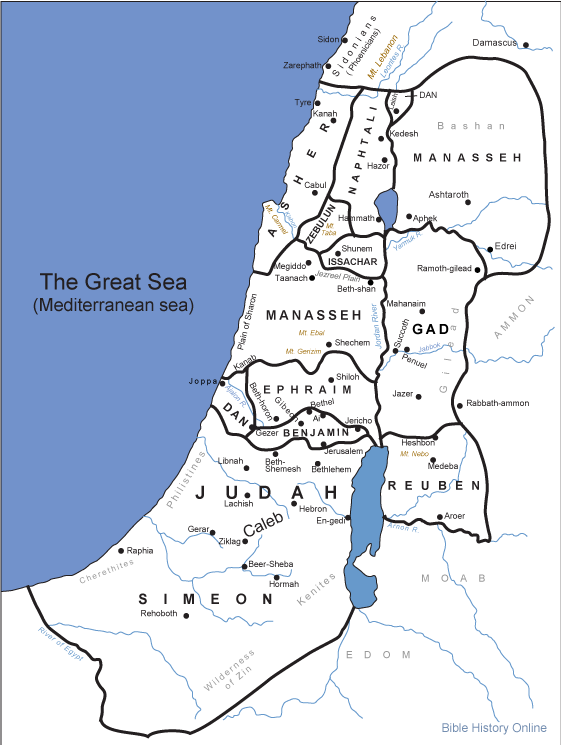
In Joshua 19 Simeon is given land from Judah because they did not need all that had been given to them.  Zebulon, Issachar, Asher, Naphtali, and Dan are the last to receive their land.  Joshua’s town is in Ephraim.  Today, the country of Israel occupies a much smaller area than that given originally by Jehovah and occupied by them at the time spoken of here.

The cities of refuge are chosen in Joshua 20.  This is a place that those who are waiting for trial for murder can stay with safety to prevent revenge for accidental death.  This is one of the reasons that American laws differentiate between manslaughter and other levels of murder.  Our crime of manslaughter is the one that is being dealt with in these verses.  If you intentionally killed someone, you would not be allowed refuge in these cities for long.  Once your trial was held and you were found guilty of premeditated murder, you would be executed.

The priests which are descended from Levi must settle among the others and this is decided in Joshua 21.  While Jerusalem became the center of the Jewish religion after the temple was constructed, now it is in Shiloh.  The Levites must be distributed in each of the other eleven tribes.  Their job is to keep the Israelites trained on worshipping Jehovah.  Despite the presence of the priestly families, the people eventually worshiped other Gods and brought God’s rejection upon themselves.

©Copyright 2020 by Charles Kensinger
The distribution continues

Map-Canaan-Twelve-Tribes

The Clans of Joseph are next in Joshua 16. The two tribes that come from Joseph are Manasseh and Ephraim. These are the names of his two sons that were born in Egypt while he was the right-hand man of Pharaoh. The first allotment is for the descendants of Ephraim. We again read the disturbing words that they did not dislodge all the Canaanite groups. This failure to follow Jehovah’s instructions will be paid for by future generations. What are we doing, or have we done that will affect our children, grandchildren, or great-grandchildren?

The inheritance for Manasseh is shown in Joshua 17.  One interesting part of this distribution is the lands given to the daughters of Zelophehad who had no sons and only daughters.  Moses had instructed Joshua to give the daughters the land that would be their father’s.  An equal share for him as his brothers had was given to the daughters with the provision they must marry within the clan.  Their father’s allotment could not go to another tribe.

They came to Joshua asking for another allotment because they were so numerous.  The hill country was already theirs.  All they had to do was follow Yahweh’s instructions and drive the Canaanites from the land.  Ultimately the people of the hills were subjugated, but once more some of them were left living in the land.

The tent of meeting or the tabernacle is set up at Shiloh in Joshua 18.  Joshua has each tribe select three men to map the remaining territory for the balance of the families to divide.  The land is split into seven equal parcels and lots are cast to distribute it.

Benjamin is the next family group to be awarded land.  There are six more parcels of ground to be handed down.  Jehovah is the one that makes the decisions.  The casting of dice is not a random chance.  God can control anything He wants to.

©Copyright 2020 by Charles Kensinger

Joshua left some areas in Canaanite hands

Map of Israel at the end of Joshua

Joshua 12 lists the kings that have been conquered. The list does not include all of those that can cause trouble for the Israelites. A time of relative peace often gives us a false sense of security. God does not want the Jews or us to look back to our past accomplishments. His desire is to have us look at what we can accomplish in the future, not dwell on yesterday.

Joshua’s advancing age is recognized in chapter 13 of the book named for him.  The Philistines and others are identified as occupying the balance of Canaan.  The division of the property already seized is discussed beginning with the land east of the Jordan. Moses had divided the land there before his death. The following chapters give the division of the property west of the Jordan.

The division of the land west of the Jordan River starts in Joshua chapter 14. The tribe of Judah is the first that is given land. Caleb, who was one of the spies on the original trip into Canaan forty-five years ago requests the hill region still occupied by the Anakin.

Now in chapter fifteen, we hear what this eighty-five-year-old man Caleb and his family can do. Joshua 15 specifies the boundaries of the tribe of Judah. As ordered by Moses, Caleb was given the area of the Anakin which he took from them. An extra story about Caleb’s daughter is inserted here. We fathers can hardly ever deny our daughters anything.

Caleb was needed to defeat the Jebusites in Jerusalem, but apparently, he did not help. They were left there at that time and some of their descendants may still be there even though the Jews were driven out two more times. More on the distribution of the land tomorrow.

©Copyright 2020 by Charles Kensinger
Choices without consultation

In Joshua 9 we see two ways to deal with the strength of the Lord through the Israelites.  One group band together to fight while the Gibeonites use deception to establish a treaty.  The error on the part of the Jews is one we all make from time to time.  They failed to consult Jehovah.

When was the last time you decided without praying about it and waiting for an answer from God?  Would God have approved of that purchase that turned out to be ill-advised?  Has a relationship ended badly with someone that wasn’t a spiritual match?  Think about the decisions you have made this week and decide which Jehovah gave guidance for. What choices need to be cleared with the Lord? If you think about it, ask Him.

Joshua 10 tells the tale of an attack on the Gibeonites by the King of Jerusalem and others that joined him. They were upset because of the treaty Gibeah had tricked the Jews into. When Joshua heard about the attack, they came to defend Gibeah.

They were being victorious, and the enemy fled. God attacked with hail that killed many. Then Joshua requested the Sun and Moon to stand still and they did until the battle was over. The five Amorite Kings were captured and executed.

One city after another is attacked and destroyed. No one is left alive in all the southern cities. Jehovah gives them the success that He promised before they crossed the Jordan. The Jews should now know how faithful God is.

The southern kingdoms have been destroyed, but in Joshua 11 the northern kingdoms band together and attack the Israelite camp. Jehovah instructs Joshua not to be afraid of the soldiers, horses, and chariots that are as numerous as the sand. He will defeat all these forces for them as He has the southern kings.

After defeating all the armies, they invaded the cities and killed every person living in them. They even destroyed all the Anakites that lived where Yahweh had promised to give them. The Anakites are the giants that frightened their parents into wandering in the wilderness for forty years.

©Copyright 2020 by Charles Kensinger

A set back that discourages

Joshua 8 30 02

Fear is the reason for some of the Israelite’s advantages according to Joshua 5.  While they were being left alone, they celebrated Passover for the first time in their new homeland.  They also took care of the symbol of the Abrahamic covenant, circumcision of every male.  The manna ends when they eat the first of the produce of Canaan during the celebration.

Tomorrow they attack Jericho, but today Joshua meets the commander of Heaven’s armies.  You will notice that he does not tell Joshua that they are for them or against them. This is the army that will conquer Jericho and all of the Canaanite Cities.

Joshua 6 is the story of the destruction of Jericho.  They begin by walking around the city with the priests leading the way and blowing trumpets.  This is the way it happens for six days.  The citizens of Jericho are wondering what is going on.  On day seven they walk around seven times and shout.

At that shout, the walls fall.  Every living thing in the walls is killed except for Rahab and her family that is saved because of her actions to protect the two spies.  Nothing is to be taken by any individual.  The precious metals are gathered for the Lord’s treasury.  The conquest of Canaan has begun.

Have you ever done something that cost others their lives?  In Joshua 7 Achan does just that.  By taking some of the plunder from Jericho, Yahweh is angered against all the Israelites.  When they attack the city of Ai, they are pushed back and thirty-six are killed.  Joshua pleads their cause and God identifies the individual that has disrupted the conquest of their new land.

When confronted with the truth, he confesses.  The judgment is swift and appears to be harsh.  Jehovah wants our obedience.  That is the point.  No excuses and no apologies accepted.  Today we are forgiven of our sins, but we must accept God’s conditions even now.

Ai still must be taken.  Joshua chapter eight tells the story of the second attack.  Joshua sets an ambush behind the city at night.  While a force the size of the first attackers follows the previous scenario as before, the balance of the Israeli army hides.  The troops from Ai follow as before.  When they are defenseless, they are besieged.

The signal is the burning of the city.  Then the retreating force reverses their direction.  The defenders are trapped and turn to see Israelites behind them and their homes on fire.  The plan works perfectly.

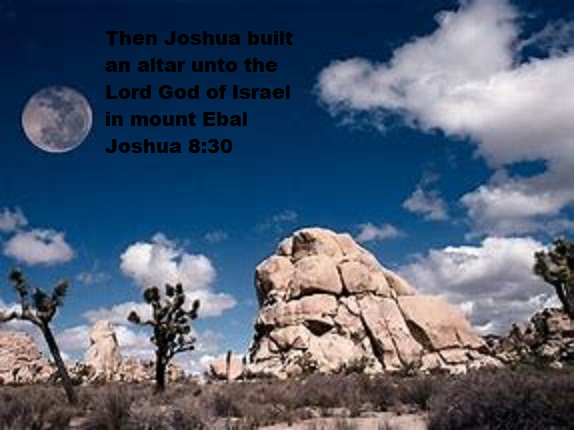
Two towns have been destroyed and Joshua builds an altar to worship Yahweh.  The law is written on stones and read to all the people.  The reminders continue.

©Copyright 2020 by Charles Kensinger

Be strong and Courageous

Strong and Courageous

We begin the first of the books of history in the scriptures. Joshua through Second Kings gives the stories of the rise and fall of the Hebrew nation and culture. Remember we are following this journey chronologically. We will be bouncing around in the different books.

Be strong and courageous is the theme of Joshua 1.  God promises to be with them and defeat those living in the land.  The size and strength of the enemy will not matter.  Joshua gives a three-day warning that they will cross the Jordan.  The fighting men of the Gadites, Reubenites, and the half-tribe of Manasseh will move out with the other Israelites to conquer the land.

This time in Joshua chapter 2 the inhabitants of the promised land are frightened at the thought of being attacked by Israel.  Two spies travel to Jericho and are hidden by a prostitute named Rahab.  In exchange for their safety, they agree to spare her family when the city is destroyed.  She confesses to them that everyone has heard of the crossing of the Red Sea, the defeat of Moab and other miracles that Yahweh has performed.

Do you spread the word of what God has done for you?  Small things can be miracles.  An accident that could have been worse.  Taking a different way of traveling to and from work and hearing of an accident on the usual path is another example.  Just as the stories of the Jews forty years of wandering frightened the Canaanites, our stories can encourage others to accept Christ.

Joshua 3 tells the story of the crossing of the Jordan River.  The differences in this and crossing the Red Sea are interesting.  The priests carrying the Ark of the Covenant step into the water before the stream stops.  Because the Jordan is not a sea, but a flowing river at flood stage, the water piles up on only one side.  Moses raised his hand and the sea parted until all the Israelites had crossed.  This time it is the priests and the Ark that trigger the drying up of the river.

Joshua 4 tells about another difference which is the monument of twelve rocks that are taken from the river.  It would be a reminder of the crossing each time they pass the rock structure.  This miracle helps to establish Joshua as the official leader of the Jews.

©Copyright 2020 by Charles Kensinger