
Obedience, consequences, and forgiveness

Leviticus 26 reminds the Israelites that the blessings of God are dependent on their obedience to his statutes and laws.  No one will be able to run them from their land.  They will never face famine or drought.  We know they did.  We also have a record of the fact that they did not follow Jehovah’s rules.

The promises for good from God are only surpassed by the condemnation that will come if they do not follow His path.  As you read this chapter, note the terrible things that are going to happen, when they do not seek Yahweh.  As we trek through the rest of the scriptures, you will see these fulfilled.  The Sabbath rest for the land will be provided by God one way or the other.

With all of this, He still promises forgiveness when they turn back to Him.  That is the promise that we have, today.

As we complete the book of Leviticus with chapter twenty-seven, we see that the Lord will accept things dedicated to Him.   He even sets the value of those people and animals which might need to be redeemed.  The emphasis is on the holiness of those dedicated to Yahweh.  That holiness makes them priceless.

As Christians, we must commit ourselves to the Lord.  Our holiness comes from Christ, not anything we have done.  Just as being the property of Jehovah made an ordinary animal holy and of value, our worth increases through our relationship with Him.

One-tenth of all the products that the land gives the Israelites are God’s.  This is where our modern tithe comes from.  One-tenth seems large if we don’t want to honor God with it.  When we love the Lord, that seems smaller than He deserves.

©Copyright 2020 by Charles Kensinger

The year of Jubilee

Leviticus 24 is quite unusual.  We have instructions for the Show Bread that is to be on the altar every day.  Then a story about stoning a blasphemer is told.  Pomp and circumstance at its best, don’t you think?  Ceremony and discipline.  Jehovah wishes to be honored and respected.  Insulting His name is not permitted.  The entire assembly had to hit him with rocks. That is what stoning is. Over a million people threw a rock at this guy.  How big was that pile when they were done?  Every time they passed back that way, I am sure the story was told until they were sick of hearing about The Blasphemer.  Unfortunately, I don’t think they learned the lesson very well.

Crop rotation is what modern agronomists teach today, but in Leviticus 25 Jehovah instructed the Hebrews to give the land a rest every seventh year.  They never did it.

To compound things, even more, they were to observe a Year of Jubilee every fifty years.  During this fiftieth year celebration, all the property in the promised land was to be given back to those families that it was given to at the time the land was settled.  When selling property, it was to be remembered that God owned all the land and that the Israelites were given it to farm and raise their families on.

Another interesting item in VSS. 35-38 is that Jews were not to charge other Jew’s interest on loans.  If a fellow Israelite needed to borrow money, it was to be loaned without interest.  What If Christians did this today?  The restriction went further in vs. 37.  They were not to sell food at a profit to each other.  I’m sure that is another command that was not heeded.

The chapter ends with a reminder that the Israelites are to be God’s servants.  Followers of Christ have the same commitment.  We are to be Yahweh’s servants by serving others as Christ did.

©Copyright 2020 by Charles Kensinger
Happy holy days

Leviticus chapter 22 emphasizes the importance of cleanliness on the part of the priests.  Death is the reward for performing their duties while unclean.  The life of those who minister to the people and to Jehovah have additional restrictions.  This continues today, but many in Christian service rebel against the high standards they are held to.  The call to ministry is special and not to be taken lightly.

In many of the verses, God says, “I am the Lord.”  This is literally translated, “I am that I am.”  This is the name that we transliterate as Jehovah or Yahweh.  It can be stated another way.  “I exist because I exist.”  He is the Creator, not a creation.  Throughout the scriptures, this is stated in various manners.  God is God and there are no others.

The Sabbath is one of the festivals mentioned in Leviticus 23.  These are holidays.  They are days of rest and no work is to be done.  A minimum of one day a week is to be celebrated.  The Passover is the next one mentioned with the Feast of Unleavened bread.  The Festival of First Fruits is to celebrate the beginning of the harvest.

The Festival of Weeks, Trumpets, and Tabernacles, as well as the Day of Atonement, are all times to stop and think about what God has done for them.  We have lost the idea of rest on holidays and focusing on God.  Each holiday has its own regulations just as each of our holidays is celebrated for different reasons.

©Copyright 2020 by Charles Kensinger

Capital punishment

Leviticus 20 23

Leviticus 19 commands us to be Holy just as Yahweh is.  What is meant by this term?  To be holy means to be separate or different from what is normal.  You can’t be holy when you act like everyone else.
Some of the Ten Commandments and other laws are repeated.  God wants the Israelites to remember these and continues to remind them and us of what is expected.

Generosity is encouraged by not harvesting a second or third time in the fields and vineyards.  The process of allowing the poor to go onto other’s property to glean or harvest what was left has many valuable aspects.  They work for what they receive.  The pride of work is maintained even if they have no crops of their own to gather.  Today’s harvesting equipment does not contribute to this type of generosity.

Kindness is also demanded.  Many other laws are spoken of here.  Horticultural laws, piercing, tattoos, and spirituality are dealt with in this chapter.  All the law is to be obeyed.  This makes it impossible.  The number of regulations causes increased difficulty in remembering and obeying everything God commands.

The penalties for sin are specified in Leviticus 20.  Capital crimes are sacrificing children to foreign gods, bestiality, homosexuality, dishonoring your parents and committing adultery.

Other sins mean separation from the community, being childless or other forms of discipline.  The purpose of these punishments is to make the Israelites different from others who used to live in the land they will inhabit.

Today we want to conform.  Being as much like others as possible is the goal.  As Christians, we also are to be holy, separate or different.  We don’t just separate ourselves physically or be different in ways that involve dress or actions just to be different.  There are reasons not to follow the practices of the world at large.

Sin is to be shunned in many forms.  Gossip, slander, and backbiting are ways that we follow the world and not Jehovah.  Questionable business practices are other ways.  While following the law does not save us, not obeying God makes us look like everyone else.  This is not being Holy like God.

Uncleanness is dealt with again in Leviticus 21.  Touching dead bodies other than immediate family members is restricted to the priests.  Shaving hair and beards are restricted.  Marriage practices are also covered.  Disgrace by children is also specified along with punishment for the children.

The last part of the chapter seems to make God out to be prejudiced against those with handicaps.  Yahweh restricts their approaching the altar of sacrifice.  He does not cut them off completely or demand their execution as for those who willfully sin.  There is a difference in the way these groups are to be dealt with.

©Copyright 2020 by Charles Kensinger
What is a scape goat?

Leviticus 16 8

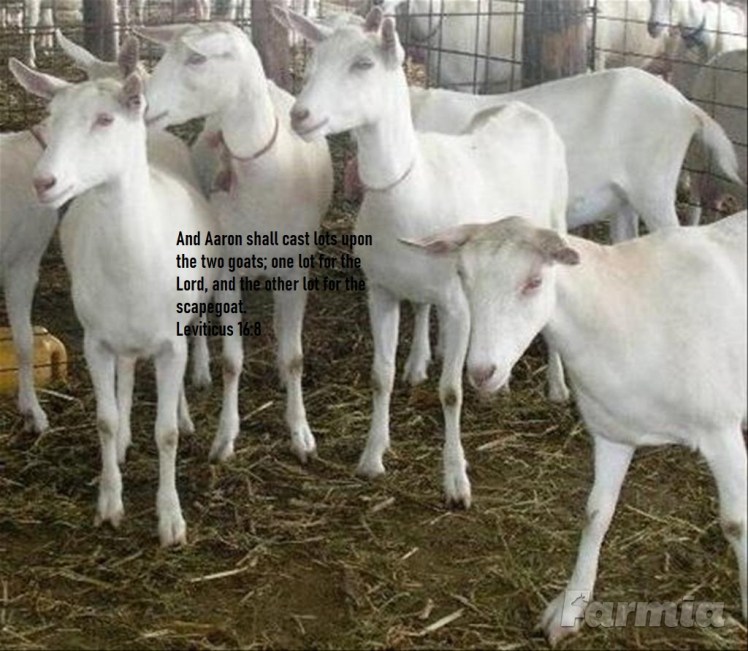
The teaching of the scape goat in Leviticus 16 is very interesting.  In addition to having a burnt offering and sacrifice of a goat and a bull before God there is another goat that is left alive.  The sins of all the people are to be placed on the head of the goat.  Just as our sins were placed on Jesus at the cross, the live goat takes away their sins when it is released and runs away. The New Testament tells us that Jesus is both this scape goat and the ultimate perfect Passover lamb that is sacrifice once and for all time.

Leviticus 17 adds more restrictions to the sacrifices that are being offered.  The ban on offerings to idols is reiterated.  Eating meat with the blood still in it is again mentioned.  God does not want us eating or drinking any blood.  The vampire legends probably stem from this and pagan religions that have practiced it since these early times.  The life is in the blood.  There is no forgiveness of sins without the shedding of blood. This was accomplished by Jesus’ death on the cross.

Sex is talked about in Leviticus 18.  Restrictions on sex with relatives is often thought to be because of the possibility of diseases and mutations that can be caused by this.  Daughters-in-law and wives of fathers and sons would not be included in these medical areas.

Homosexuality and bestiality are restricted.  This has not changed in the view of Jehovah in these thousands of years.  The law is ignored because we do not want to listen to anyone who tries to keep us from doing everything we want to do.  Bestiality, incest, and homosexuality are restricted.  Christians who want to follow God’s desires will respect this. Sexual sin is one of this century’s greatest problems. We do not want to restrict any action that we view as pleasurable. We do not consider the effects of these sinful actions. Yahweh is not a party pooper. These instructions are like the ones we give our children not to play in the street or light matches without our supervision. These laws are for our own protection.

©Copyright 2020 by Charles Kensinger

Clean and Unclean

Leviticus 11 7

Leviticus 11 specifies clean and unclean animals.  Today we do not concern ourselves with these laws.  They are considered dietary and not needed in our modern society.  The list of unclean includes the camel, rock badger, rabbit, pig, vultures, kites, falcons, eagles, ravens, and crows.  Certain sea creatures and insects are also unclean as well as all crawling animals like lizards.

The restrictions on pork and other meats may continue to be good for humans.  Medicine directs us to avoid many of these that God originally made unclean for us.  Most Americans still maintain insect prohibition and expand it to all the family.

The teaching in Leviticus 12 about the cleansing of a woman after childbirth also deals with the subject of blood and purification.  Blood must be shed to cancel out sin.  Blood also makes a person unclean if they meet blood except in the case of making offerings to Jehovah.  Once again, a provision is made for someone that cannot afford a lamb.

Skin disease is discussed in Leviticus 13.  The law gives medical advice as well as nutritional information.  Much of this does not seem very important to modern people.  We must understand that this is instructions to the people who do not have medical doctors.  Medicine in that age was trial and error.  The isolation of certain people with specific symptoms is to prevent the contagious conditions being spread throughout the community.

The end of this chapter deals with mold in much the same manner.  USDA & FDA regulations were not available.  These are the Israeli equivalent to these rules.

©Copyright 2020 by Charles Kensinger

Hygiene and skin diseases

Leprosy 001Leviticus 14 continues with the cleansing of those with skin diseases and ends with cleansing from the mold. Again, much of this is ritual. There may be some scientific or medical explanation for the use of cedarwood and olive oil. If your church has rituals these will not seem as curious as they are for those who have few ceremonies to compare with this.
A similar procedure is used for cleansing a home of mold. This is significantly different from modern mold remuneration, but there are some similarities. There are agents to be used to clean the mold from surfaces. In some cases, surface materials must be removed and discarded. Repairs are then made.

Leviticus 15 is not just for ceremonial cleansing.  This is for hygienic purposes as well.  The washing with water may not be as effective as using modern anti-bacterial, but it is better than not bothering to wash at all.  Some cultures have no habits for bathing or washing on a regular basis.  These Hebrew laws stand in contrast to those who shun washing themselves or their clothing.  While these standards may be poor compared to twenty-first-century health regulations, we can still see how the Israelites would be a community with much less disease than many of their neighbors.

©Copyright 2020 by Charles Kensinger

Ordination of the priests

Leviticus 9 24 Sunset

Now we read Leviticus chapter 8. As a deacon, I am especially happy that the modern ordination service does not include washing and dressing the candidate in these ceremonial clothes. The procedure was to acknowledge the selection of Aaron and his sons by God.

Sprinkling oil and blood on them is another part of the service I am glad has gone out of style. The big one is the command to remain at the entrance for seven days on penalty of death.

Leviticus 9 tells us about the first sacrifices in the new tabernacle.  The ordination of the new priests is complete.  Aaron and his sons perform their duties as instructed.  They present their offerings and the rest of the peoples’.

After all the sacrifices, Aaron and Moses went back into the tabernacle.   When they came back out the glory of the Lord descended in for and the people were again reminded that Jehovah is real.

Leviticus chapter ten starts with a story about the death of two of Aaron’s sons for disobeying Yahweh’s will.  The fiery deaths showed the power of Israel’s God.  Any doubt that He could be counted on to keep His word should have been removed.

The rest of the chapter is the laws the priests must follow.  After two have not followed the instructions, it is a good time to revisit the regulations.  When his two other sons are ordained to replace their dead brothers, Aaron fails to eat his part of the sacrifice.  Moses, not God, becomes angry.  Jehovah realized the good reason that Aaron tells his angry brother.  After that, Moses agrees with God and forgives his older brother.

©Copyright 2020 by Charles Kensinger

Baptist burnt offerings

burnt-offering-11

We proceed with what is sinful to Jehovah.  Leviticus 5 starts with a failure to testify about someone who sins.  This includes ignoring sinful behavior or denying that it is against Jehovah’s laws.  Uncleanness is a sin.  Foolish vows are a sin.

We next deal with the guilt offering for sins committed against property belonging to Yahweh.   Today this would include defrauding or robbing religious institutions.   Often, we believe if there is no law against our actions on the books, we are innocent.  Yahweh knows when we are guilty, and His Spirit will point it out to us.  Then we must admit our guilt and ask forgiveness for it.

Leviticus chapter six gives sins that require restitution as well as a guilt sacrifice.  Steeling, fraud and extortion are listed.  What has been taken plus twenty percent must be returned to the offended party before atoning for the guilt?

Burnt, grain, sin, and ordination offerings are also expounded upon.  Extra regulations are given.  We are told about the cleanup after burnt offerings. The fire is to remain burning even as the ashes are disposed of.  Jehovah seems to cover everything.

There must have been a lot of guilt in the Israelite’s camp.  Leviticus 7 starts with more regulations on the guilt offering.  A new offering, the fellowship offering is spoken of next.  It is like the other offerings in ways of preparation, but the meat of the animal is to be shared by the priests and the person who presents it and his family.

This is the beginning of the famous ritual for us Baptists, the potluck.  Everyone brings their offering and shares it with the preacher and his family and whoever else shows up that day for church.  But you object, there is no burning of a portion of the offering.  Look at the bottom of the fried chicken pan.  That is where the burnt offering is hidden.

©Copyright 2020 by Charles Kensinger

Sacrifices are us

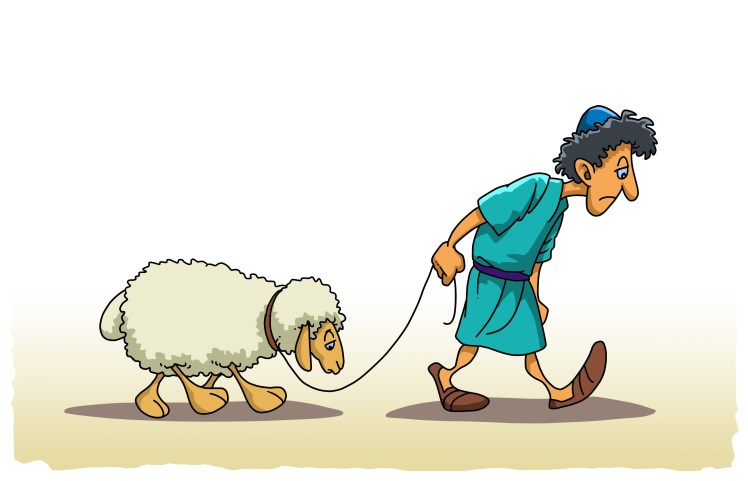
The sinner and a lambLeviticus 1 gives more instructions for the burnt offering in the tabernacle.   The directions are again extremely detailed.  A ram or male sheep can be offered, but it must be male.  The poor are not left out.  Provisions for using an inexpensive dove or pigeon is made.

The contact with the animal and the person the sacrifice is for is essential.  When Jesus Christ made His ultimate and final sacrifice, He had connected himself to all of us by taking on humanity.  Without this connection, there could be no substitutionary atonement.

While the burnt offering is representative of Christ, the grain offering in Leviticus 2 is reminiscent of the unleavened bread in the Passover feast.  The priests are given their portion of this gift.  This establishes the heritage of supporting professional ministers with our gifts.  Again, Jehovah is very plain about all the accepted procedures.

Yeast and honey are restricted from the grain offerings.  Salt, on the other hand, is mandatory.  Why?  The reference to the aroma is the key to the yeast and honey.  Burning them causes an unpleasant odor.  Salt is a preservative just as Passover preserved Israel by delivering them from Pharaoh.

In Leviticus 3 the blood is the focus.  It must be splashed on the altar when any offer is made, but the peace offering is to establish a calm resolution between the sinfulness of man and Yahweh.  Blood is an integral part of this.  The blood of Christ had to be shed to cover humanity’s sin.

The prohibition of eating fat and blood is the precursor to scientific and medical reasons that we now have.  To avoid illnesses the Jews were given health advice in their law.  This law is a continuation of the commands in Exodus.  Here we have more specifics.

Leviticus chapter 4 tells us about using a bull as the sacrifice for unintentional sin.  Even the smallest infraction must be atoned for in this manner.  The blood is drained and sprinkled on the altar and poured out around it.  The fat and entrails are burned on the altar. The rest is burned outside of the camp.  None is given to the Levites for food.

The sacrifice varies due to who the offering is for.  Aaron, Moses, another priest, Moses or another leader or the people will sin, and the blood must be spilled.  The atonement must be made.  Our words about Christ’s final act, canceling this needed action apply here also.  He fulfilled the law.  It was not canceled and should not be ignored.

©Copyright 2020 by Charles Kensinger