Training is critical to job performance. It is one of those items that is taken into consideration with each new hire. Training is another cost for a new employee. If your company does not calculate this factor, it is still costing them money to train people for positions and functions.
The best way for most of us to learn is to be shown a task and then allowed to perform it until we are comfortable with it. The individual we are training sets such things as the number of repetitions needed, the amount of background knowledge required, and supervisory aspects. No two employees are ever the same, even if they are similar in some characteristics.
Over forty years in business in the office, out in the factory or shop, and everything from a line assembler to the operations manager, I have learned how to train and that many people are not naturally suited to train or be trained.
Three areas need to be looked at to ascertain that a company has adequate training. Does corporate management provide training guidelines? Do they provide the man (or woman) hours and equipment to allow for excellent education of job functions? Does middle management oversee the process thoroughly? If any of the answers to any of these questions are no, an employee may be lost due to a lack of training.
In some cases, higher-ups assume that the training takes place at the lower levels. That assumption is often incorrect. Top executives do not train; however, they need to guarantee that each level below them knows their responsibilities for advancement in the job performance of all under their authority. An office manager, branch manager, supervisor or foreperson should be held responsible for all those who are under them.
Training takes time away from daily responsibilities for both the new employee and the trainer. Other associates need to accept the extra load for those involved in providing proper training. If equipment needs to be used to learn, it should be provided. Often, special training centers can be assembled to give ongoing refresher courses in newly introduced functions. When you want an employee to learn new software, you must give them the time with that program and a trainer to accomplish the task.
Now we are back to the managers and supervisors for the oversight of all functions. A cursory glance at production or other work is not enough to determine if everything is going as planned. Quality inspection of work is required. Time and money are saved because these tasks are given proper emphasis.
One of the best tools I found at many of the companies I worked with was the procedures manual. This is a book of operations that are required for every employee to accomplish their assigned tasks. I’ve written and used these texts often. They are one more tool for training.
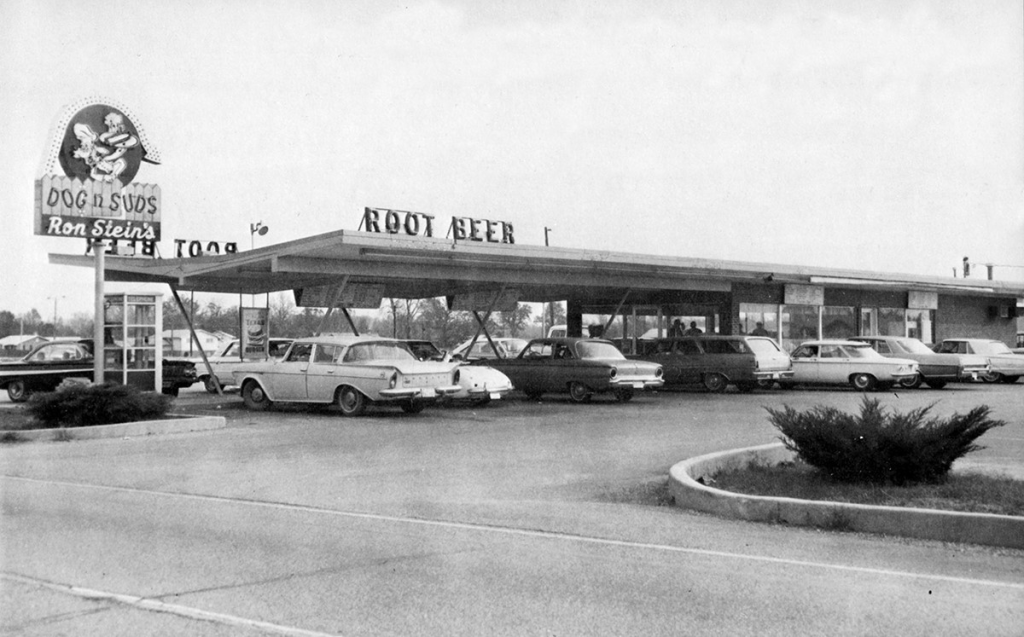
My first job was as a fry cook at Dog ‘N Suds drive-in in Springfield, Missouri. It paid $1.25/hour. I loved it. Mr. and Mrs. Costello were the owners. Two of their three sons worked there also. They were still in school. I was a student at Hillcrest High School. This was the summer between my sophomore and junior years. Most of the other employees were or had been students at Central High School. We had a great time.
Within a few months, I was trained to do everything in the small kitchen. I learned to make root beer and cola syrups and place the containers on the drink fountains. I took orders from the speaker and even helped the carhops take orders out. I chopped tomatoes, lettuce, and onions. I closed some evenings and even came over during the school year and missed a class or two my senior year. New employees came and left. Between my freshman and sophomore year in college, I also left.
My Mom worked at the Zenith Television plant. She helped me get on. I had turned eighteen the previous summer and met the age requirement. I loved the pay. I hated the job. I was working on a final line. My job was to hang the tuner and put in three or four screws depending on the model going down the conveyor. If it had not been for my German vocabulary cards, I would have gone insane. It was dull boring work.
My first week I learned that I was not to help the people next to me on the line. There were two screws the person before me had to tighten. They were already installed. Sometimes the set was in front of me, and these bolts had not been torqued down. I was reprimanded when the supervisor caught me doing this after my job was done.
The screws I installed were the same size as the ones the next guy had to put in. He then hung something on them and tightened them down. When I picked up these screws from my bin, I might have two extra and thought it efficient to put them in when I had time. That was also a no-no. This was a union job. Each employee had their own job to do. You could not help each other. That was stupid to me.
At the end of the summer, I quit before I had to join the union and returned to college. I went to work at a restaurant as a busboy and dishwasher. The work was not hard. It also was not challenging. The pay was not as good as the factory, but I was back in classes.
The next fall I commuted thirty miles to college and the second semester I lived in a dormitory. I did not work my junior year and spent the summer working as a summer missionary in Pennsylvania. The pay was not much. I learned a great deal about Christian ministry. When I returned home, my fiancé and I started planning our spring wedding after graduating.
I took a job at a new fast-food chain that was opening. It was the first in the area. By the time I graduated, I was offered a job in the management trainee program. I took it and they moved us. I left because of problems with the management and worked several jobs before we returned to Springfield. I had worked in management at a convenience store, as a door-to-door salesman, and as a marketing director for a small company. These were added to my resume.
Back at home, I took a sales position at a retail pet store. I moved to another store as the manager and then left there to take a job for the wholesale company the owner had that supplied his stores and others in the area. I was the assistant livestock manager because I had read everything I could about the pets. When the purchasing agent left my two previous bosses recommended me for the job. They both told the owner that I could do anything they asked of me.
I have always enjoyed learning something new and taking on challenges. When I left there, I started as a parts distributor for the manufacturing industry. I was hired as the purchasing agent and became office manager, outside sales, inside sales, and ultimately operations manager. After twenty-five years I was passed over for the branch manager’s position.
My district supervisor described me as the best inside guy in the company. When I was operations manager, I worked both the office and in outside sales putting in eighty or more hours a week for the same money. For the first time in three years, we returned to making a profit for the company. I was rewarded by having a former employee re-hired and made my boss.
My next position was as a buyer for one of the companies that was a customer for the last twenty-five years. I was done with sales. I continued to work for manufacturers until I retired as purchasing manager. Each position had good and bad points and good and bad management and employees. There is no perfect job. Life is as good as you want to make it. That includes your work life. Learn all you can to be able to move to the next level. That may not be at your current company.
If your employer offers training through a local college or trade school, take advantage of it. Give the loyalty and hard work that is required for each new position. Do not stay any longer than you must when situations change from good to bad. Do not change jobs because someone has offered you more money.
There is a reason they want you and it may not be as advantageous a position as you think at first. Many coworkers over the years left the company we worked for only to return when they were terminated. I turned down jobs because God told me not to take them. Once I wanted a position so badly that I prayed for it not to be offered to me if it was not where I should be. They did not and I eventually found a better position.
I’ve been laid off, fired, and quit. I’ve lost jobs I liked and ones I hated. Bosses have liked me, hated me, abused me, and taken advantage of me. The one I have always tried to please is Jesus whom I call Lord. I work for Him and He has always had my back. That is the best advice I can give you about liking what you are doing. “Work as unto the Lord.” Colossians 3:23
The dispenser in the men’s room that is closest to the office at the Springfield business always seems to be out of TP when it is needed the most. While contemplating this sad state of affairs and reloading it, these reasons why one might not want to do this task came to mind. Most would not apply to a Christian because of the command to be a servant.
It is not your job. While working in food service, a printed job description was provided that included cleaning and restocking the restrooms every hour as needed. Since it did not specifically mention this product, it might not be your job.
It is below my pay grade. Why not perform tasks that are below your pay scale? It must mean that you are doing something and getting paid more than you should. Isn’t that what everyone wants?
It is above my pay grade. A philosophy of always demonstrating the positions above one’s capabilities and job can lead to a promotion and raise in pay.
There has been no training for the job. Really? You are not smart enough to know how to load a dispenser. The key is in the lock on the top. Anyone with half a brain should be able to reload it.
This is personal time. Yes, it is. But, if you are on the clock, you can take a few minutes to change a roll of toilet paper.
It is demeaning. No one will see you. They will not think less of you. They will even appreciate you if they are the next one to use the facility.
It is unsanitary. The paper is wrapped. You unwrap it, throw away the old core, and put the new roll on the dispenser.
Where is the spare tissue kept? In this case on a shelf in front of you. Open your eyes.
No one else seems to be willing to do this job. And that makes you another nobody.
If you wanted to, you could. There is not really a good reason not to. You are inconsiderate and uncooperative.
Stop and consider your place of employment. What are the small things that others ignore that you could accomplish for them? During my working years, I looked for any way I could learn more and become more beneficial to the company. I began as a fry cook when I was sixteen. I’ve worked my way up to management for more companies than I care to think about. That was by doing anything I could for anyone. I suggest that you try the same things I did to advance your career.

 Charles (Chuck) Kensinger