Training is critical to job performance. It is one of those items that is taken into consideration with each new hire. Training is another cost for a new employee. If your company does not calculate this factor, it is still costing them money to train people for positions and functions.
The best way for most of us to learn is to be shown a task and then allowed to perform it until we are comfortable with it. The individual we are training sets such things as the number of repetitions needed, the amount of background knowledge required, and supervisory aspects. No two employees are ever the same, even if they are similar in some characteristics.
Over forty years in business in the office, out in the factory or shop, and everything from a line assembler to the operations manager, I have learned how to train and that many people are not naturally suited to train or be trained.
Three areas need to be looked at to ascertain that a company has adequate training. Does corporate management provide training guidelines? Do they provide the man (or woman) hours and equipment to allow for excellent education of job functions? Does middle management oversee the process thoroughly? If any of the answers to any of these questions are no, an employee may be lost due to a lack of training.
In some cases, higher-ups assume that the training takes place at the lower levels. That assumption is often incorrect. Top executives do not train; however, they need to guarantee that each level below them knows their responsibilities for advancement in the job performance of all under their authority. An office manager, branch manager, supervisor or foreperson should be held responsible for all those who are under them.
Training takes time away from daily responsibilities for both the new employee and the trainer. Other associates need to accept the extra load for those involved in providing proper training. If equipment needs to be used to learn, it should be provided. Often, special training centers can be assembled to give ongoing refresher courses in newly introduced functions. When you want an employee to learn new software, you must give them the time with that program and a trainer to accomplish the task.
Now we are back to the managers and supervisors for the oversight of all functions. A cursory glance at production or other work is not enough to determine if everything is going as planned. Quality inspection of work is required. Time and money are saved because these tasks are given proper emphasis.
One of the best tools I found at many of the companies I worked with was the procedures manual. This is a book of operations that are required for every employee to accomplish their assigned tasks. I’ve written and used these texts often. They are one more tool for training.
Is this your attitude to estate planning? Do you play the lottery in your state or wager in other ways regularly? In my state of Missouri, the lottery began on January 20, 1986. Do the math. If you purchased one ticket each week from that day to this, you would have spent over $2,000. That does not sound like much over thirty-nine years.
I know some people who “invest” ten or twenty dollars out of each paycheck. That puts you out of pocket up to more than $20,000. Check the lottery website for your state. Statistically speaking, if you put that amount in the bank for the same period, you would still have the money. It would be earning interest.
Do you have that much in your retirement fund? Why not? Ten dollars a week is less than one meal out at most restaurants. Do you smoke, or drink coffee, sodas, or beer? Could you give up that much of those for your future? We don’t think about it that way.
If your employer offers a matching plan on a 401k account of up to four percent of your annual wages like mine did this would take away about $2,000 each year from your salary. They added that to my investment. I quit buying vending machine food at work and saved that much. I could pay my bills with forty dollars less each week. That would be $90,000 by the time you retire. Add the interest to that.
Remember that some accounts compound interest daily. At 5% in 45 years, you would have more than double what you put in, as interest in your investment. The amounts will vary. Check with your company or bank for a return on what you can afford. I think you will be surprised. A financial planner can help you as well. Make sure you get their charges in writing before they receive your money.
Some people will offer unheard-of returns from speculating on a wild shot. These are usually no better than the lottery. Before-tax money may not be the way you want to invest. That money may not be able to be removed before you reach a certain age.
The mantra to remember is to start early in your career and invest what you can from every paycheck. Most of us do not start saving on our first part-time job in high school or college. A friend of mine taught his children by buying them a used car when they turned sixteen. He and his wife required a payment like a loan company would charge on that purchase each payday. When their child decided they needed to finance another vehicle they would give them a check for the money that had been paid to them plus the interest earned at the bank.
That amount was how much the next purchase could be. These students learned it was better to pay themselves and let the bank pay them than pay interest to loan companies. I wish my parents had done that for me.
Think about how you spend, invest, or waste the money you earn. Wisdom does not have to come with age. Begin wisely and things will get better for you as your responsibilities increase. Do not learn it the hard way like I did.
Twenty-five years working for a power transmission distributor starting in purchasing, going to sales both inside and outside, and taking the office manager position which led to the operations manager, has put me in a unique place to know what customer service should be and what it usually is not. What we strive for is treating the one we are serving in a way that would be pleasing to ourselves, if in their shoes. That is the Golden Rule. “Do to others as you want them to do to you.” (Matthew 7:11-13)
I say we strove for that knowing that often that high peak is not attained. The difficulty there was in recognizing what was needed to please the one we served, not in identifying who the customer was. In purchasing it may appear that we do not need to supply customer service because we do not have any customers. My philosophy is shared by many in the purchasing profession. Our customers are those who have requested products or services ordered by us.
We indeed work for the same company they do. It is also true that not respecting the person and delivering the needed outcome may adversely affect our employment status. Aside from the possibility of reprimand or even termination, I strive to deliver my “customers” the best service I can because my work is to be “as unto the Lord”. (Colossians 3:23-24)
I never had a job title of customer service representative (CSR). One of my managers referred to me as the best CSR in his region. He pointed out to me that I was not one of the best salespeople. That disqualified me for being given a position that was considered a sales job. My title at one point was sales service specialist. This was what others called a salesman.
One radio host is well known for talking about customer no-service. What he wants us to realize is that companies we deal with do not put service ahead of getting the order. This manager of mine showed me that the most important part of what our employees did was to close a deal. Service was not important.
This was the same company that issued business cards that had sales service specialists on them, not salespeople. I call this hypocrisy. This is saying one thing but doing the opposite. I left that company and returned to purchasing and retired as a purchasing manager almost twenty years later.
Instead of overseeing delivering the best service for a company I became the one that judged if this business and others employed those that gave the quality of product and service that I had proven that I would give. I believe the customers lost on that transaction.
The first part of this article is aimed at management, including owners, managers, and supervisors. The last section is for employees, so before you yell too loud and long at what they are being told, wait for yourself.
I have always been an employee of someone else. While I have been in middle management and supervisory positions, I have never been the owner or top boss. I have had good and bad bosses. I have also seen good and bad employees. I believe there are many reasons for dissatisfaction in companies.
Failure of management to consider employees’ circumstances. My first job was at a fast-food drive-in. I was a fry cook. The owners demonstrated how a boss can be a mentor, friend, and second parent. They allowed me to be a shift manager as a high school student. They worked with all their student employees’ school schedules. We were required to tell them the dates we needed off as soon as we could.
Inability to admit that you made a mistake. This is a problem for employers, management, and employees. If you are tasked with correcting mistakes that are made, please confirm if the error is yours. If it is not, can you find time to point out the problem to the one that caused it without shaming? This is a major complaint. The boss calls out other’s mistakes but never mentions their own.
When I talk about shame, I mean bringing these mistakes up in a meeting with others. If a manager does not who caused an error, he should do his diligent research. There is usually a way to find out who worked on the project. Ask each participant what their assigned tasks were. Do not ask, “Did you make this error.” The answer will usually be no.
I’ve been the one blamed for problems when I was not even involved directly. I investigated and determined where the mistake was made and spoke directly with whoever needed the refresher course. Seldom was it necessary to take it to a higher authority. At times the offender would not admit responsibility. Those were the times I simply instructed multiple people on how to complete the task correctly. This solved the problem.
No one is perfect. We must all accept responsibility for our blunders. I once had a boss tell me I spent to long on a drive calculation I was doing for a salesman. They said a mistake would not kill anyone. When I told him what had been said he emphasized to me that it was for a manlift. A mistake could endanger someone.
The picture was ancient. Two nice-looking girls were sitting at manual typewriters in a school room. You knew it was old because it was black & white, and their clothes were vintage. My comment to the question on Facebook, “Do you remember this?” was, “Yes, I am the guy behind the two girls.” Slightly out of focus, a young man with horn-rimmed glasses and a white shirt was in the background. He was your typical nerd from the fifties and sixties. You couldn’t see his pocket protector, but I’m sure it was there.
My keyboarding career started that way. Typing class in high school. A few guys. Mostly girls were getting a head start on their stimulating careers in the secretarial field. Today, I am using a laptop to write. That class at Hillcrest is not typing but keyboarding, and it will soon die because no one gets to high school without being able to use a keyboard. Most get that education in kindergarten.
Computers first came to my attention in grade school. It was the Univac that I saw in magazines and books. Then there was the IBM monstrosity that NASA used to compute trajectories for the Mercury missions. I never knew what a computer really was until I saw “Secret Treasures”. Who knew that people used to be called computers? We just called them smart kids.
Our first computer keyboard was on a Texas Instruments device that was smaller than my first AM radio. Then came the Commodore, the Atari, and the 86-format machine. That was the first with minor connectivity and its own monitor. The rest plugged into the TV like your first video game. My first video game was brother Bud’s Pong.
My first purchasing position came with a brush with computing. The owner of the company had been looking into computerizing accounting, purchasing, and inventory control. For six months, I was tasked with designing and assigning unique part numbers for each of our products. I spent many extra hours and was not present when the machines were put into operation.
My second shot at a business in purchasing was again before that location had computers. The corporation had computers at both major warehouses. I was intrigued that their part number system was like the one I previously designed. When we had terminals installed at our branch, I enjoyed the time savings that the system brought.
I was also glad to see the inventory card system be moved out as well as the billing machine. Inventory, billing, and purchasing were done on the terminals. It was several years later before I had a personal computer on my desk at work.
Where does computer illiteracy come into? I am a baby boomer. I’ve never had problems with any electrical or electronic gadget. Currently, artificial intelligence seems to be the problem area. I’ve worked with AI since I used my first digital calculator.
Mechanical calculators used gears, cams, and other mechanical devices to make sums, multiply, divide, and subtract. If you have never seen one, go to an engineering museum. Science fiction writers have predicted that computers and robots would take over our world.
In the late 1990s, some thought that life as we knew it would end on January 1st of 2000. Computer chips originally could not go beyond 1999. Programmers got with the plan, and we were ready on December 31. Now we need to figure out how to do things on paper again. We may never experience an EMP event that is currently being predicted, but just in case, keep pencil and paper handy.
For almost five years I was with Positronic Industries. Starting as a buyer, before the first anniversary a promotion to purchasing supervisor came through. One of my favorite things about that job was the feeling of the company being a family. Not all the employees felt that way, though.
One of my favorite things was the annual Christmas party. A Hawaiian luau, a western theme, and Silver Dollar City were some of the themes and venues that we were invited to with one special person in our lives. Many of my friends from that time are no longer there.
The reason that I enjoyed working for them was the people that I worked with and for. I would have liked to have retired from that position, but the crash of 2008 meant that many of us were laid off during 2009 and following. I have learned much from that experience.
One thing is not to take anything for granted. I continued my career with two other companies after that time. I retired as a purchasing manager. My ministry continued with each of these companies. Now I hope I can share some other things I’ve learned over my fifty years in business.
Managers and supervisors often believe that their job is to tell those that report to them what they need to do. A better way is to work with the team that you lead and utilize everyone’s talents and expertise to be better at what you are tasked to do. My experience has been that ideas and concepts flow from each employee in varied ways.
I worked for one boss that seemed to be constantly in fear that others would be deemed more suitable for their position. Instead of openly utilizing each person and their abilities, they dismissed valid ideas and changes in procedures. After a few weeks these same concepts were introduced as the manager’s brainchild. By this technic, they claimed these as their own.
I’ve seen this method utilized in church and community situations as well. I believe a lack of self-esteem is at the heart of this behavior. Refusing to give credit where it is due causes some to stop sharing their thoughts. Why contribute when someone else accepts the rewards?
Criticism for the sake of attacking others is one more common occurrence. I’ve seen this from employees to management and in the converse. If we do not feel that we are respected and appreciated, we may attack someone that we see as a threat to us. This does not promote a unified front.
Have you been on the receiving end of this type of abuse? Recognizing why it is taking place can contribute to eliminating this problem. It does not usually help to accuse the offender of this practice. I have left positions on more than one occasion when the owner or manager displayed objectional behaviors or a lack of confidence in me.
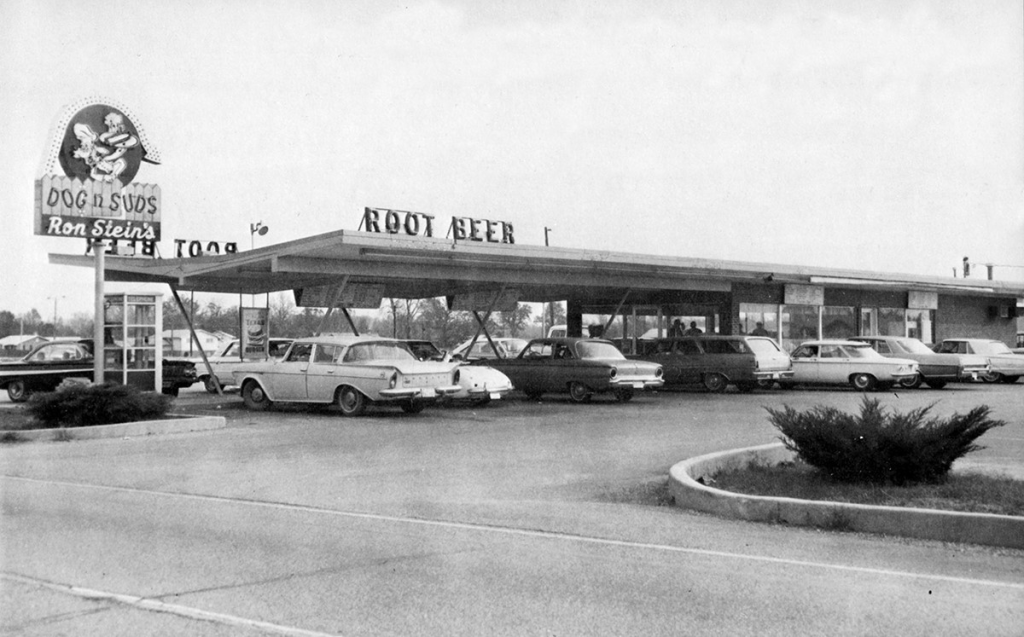
I’ve mentioned many negatives and would like to leave you with the qualities of the three best bosses I have had in my life. The owner at Dog ‘N Suds, my first job, recognized the value of each of his employees. If someone had difficulties with certain tasks, they were aided in those areas. He also recognized those who simply did not try to learn, and they were allowed to find other employment.
Tom saw something in me during our interview that made him offer me a sales position in an industry that I had no experience with. After a few months, he promoted me to a store manager, recommended me for a job under another manager, and for my first purchasing position. He saw what I could be and supported my growth.
I accepted another job for a man that I openly told his boss that I would be working to move into his role. I was honest and thought later that my words were ill chosen. I have always looked for improvement in myself and others. When I join a company or organization, I endeavor to work in any capacity that I can.
I enjoy a challenge and rarely shirk added responsibilities. Gary recognized this and trained me to take his place when he had an opportunity to advance. My retiring from the workforce as a purchasing manager was a direct result of his tutelage.
Hard work, dedication to expanding your horizons, and helping others advance is what a supervisor, manager, or owner should do. I could give you more personal examples of others that have exhibited these qualities to me over the years. Take a few moments and think of others that showed you qualities that you have gained in your life.
Christmas is a time of sharing and remembrance. People have made you who you are. Some by their positive actions, while others impacted us to be different from them. I hope that I am one of the former and not the latter. Merry Christmas to you all.
That is an excellent question, isn’t it? Another difficult question is, “Do you cause people to stay or leave?” I have worked with both types of managers and fellow employees. In over forty years in business, I have seen managers chase away employees and customers.
One manager asked why I spent over thirty minutes dealing with one man that she referred to as “some farmer”. When I informed her that he was the maintenance foreman at one of our best customers she turned around and walked away. I saw another man throw a tray of food across the kitchen at a fast-food restaurant where I worked. He was the top manager at the company.
Salesmen that I know often tell their customers to ask for certain inside people that they know will give the customer the best service. Most people will wait for associates that take care of them. Time and again I see employees treat those who pay their salaries with disdain and rudeness.
The adage that “the customer is always right” has been changed to “Who do they think they are?” If you have experienced any of these individuals, I hope that you contact management to make sure that they know what is happening in their businesses.
Sometimes management is a problem. Those in charge of a certain location may not correct employees because they do not care how they treat others. There are times when the best employees at a company leave these poorly managed organizations to join a manager that they have worked with before.
“The Peter Principle” by Laurence J. Peter and Raymund Hull was published in 1969 and made many of us aware of what companies often do. They promote good employees into supervisory or management positions where they eventually will fail. Not everyone who receives a new job at their current company is ineffective. Just a few.
I know employees who were truck drivers or warehousemen and became managers, salesmen, and executives who retired with coworkers praising them. I have also watched as these men and women were terminated because they could not accomplish their new tasks.
I have quit some jobs because of the managers I worked for. I have stayed at companies despite how the bosses treated me. I spent twenty years with a manager who chased off more good employees than I could count. I was the second in command. On several occasions, I was the one who made the decision that someone needed to be fired and was told that I would get to deliver the bad news.
I spent six years as an operations manager. With this company, an operations manager was normally a branch manager who was waiting to be transferred to another position or branch. In my case, they needed someone to run the branch while they dragged their feet and passed me over for the job.
When they gave the position to someone else, I found another job and moved back into purchasing where I was when I joined that company. I retired fifteen years later as a purchasing manager after working my way through three manufacturers that had all been customers for the previous twenty-five years.
Where is your career taking you? Do you enjoy what you do? Do not rule out moving to a new company or a new career. My experience in sales and management made me more effective in purchasing. You may want to change the sides of the desk like I did. Be willing to be flexible. Don’t forget to do something that you enjoy.
I watch commercials. I am a fan. Not all advertising meets my criteria. I am critical of those copywriters that make fun of us. The ads running with the councilor that are helping young homeowners not become their parents are especially offensive.
Two of our three daughters and their husbands own their homes. The finance company is also a shareholder. They are not becoming us. They all have some similarities to us and our in-laws. They are their own individuals. However, I shave my father in the mirror most days. On other days, I do not shave.
My children’s parents do not post pictures of meals and parties. Some of them and their children do. My life is not boring. If it was, you would not be reading my columns and books. I rest my case and my backside.
I am friendly, even on elevators. I also have bad jokes. At least my kids and grandkids say they are bad. I do not understand why they use my material if it is not worth laughing at. Some of them have been handed down for generations.
Then there is the TV commercial about the in-house composter. I recycle a lot of things. I follow the adage “reduce, reuse, recycle.” However, I believe that composting is best done in the ground. I have buried the leaves and food waste for many years. My garden beds are raised. That makes it easy to recycle food and yard waste. I no longer dig 3x3x6 foot trenches in my garden. It was an effective visual for the young men who wanted to date my daughters.
All the insurance commercials drive me up the wall. While sitting on the ceiling I compare Flo, Evie, the Allstate guy, the cartoon general, the toucan, and all the other spokespeople. You can insure your car, life, health, pets, and all your expensive toys.
There is even insurance that is represented as a warranty. Everything stops working at some point. Pay a monthly fee and someone else will pay some of the repair expenses. Be sure to read the fine print. What they tell you in the commercial is not what you thought you heard. Listen for “starting at,” “beginning with,” “from,” and all those other words that require thousands of words to cover their rears.
The ads for the portable fire pits that show their product in many settings with different folks around them are some of the best I have seen. They are simple and understated. The main purpose of advertising is to make you remember their name. I remember some of the company’s names, which I have shared here. There are those that I couldn’t give you even if I wanted to.
What are your favorite commercials and why? You may not see many except for the ones that pop up on your phone or streaming service. Mostly those are short and sweet which is what makes the best advertising. If there is small print on the screen or *, &, #, or other non-verbal communication do not agree to anything before you read everything. Happy hunting.
My first job was as a fry cook at Dog ‘N Suds drive-in in Springfield, Missouri. It paid $1.25/hour. I loved it. Mr. and Mrs. Costello were the owners. Two of their three sons worked there also. They were still in school. I was a student at Hillcrest High School. This was the summer between my sophomore and junior years. Most of the other employees were or had been students at Central High School. We had a great time.
Within a few months, I was trained to do everything in the small kitchen. I learned to make root beer and cola syrups and place the containers on the drink fountains. I took orders from the speaker and even helped the carhops take orders out. I chopped tomatoes, lettuce, and onions. I closed some evenings and even came over during the school year and missed a class or two my senior year. New employees came and left. Between my freshman and sophomore year in college, I also left.
My Mom worked at the Zenith Television plant. She helped me get on. I had turned eighteen the previous summer and met the age requirement. I loved the pay. I hated the job. I was working on a final line. My job was to hang the tuner and put in three or four screws depending on the model going down the conveyor. If it had not been for my German vocabulary cards, I would have gone insane. It was dull boring work.
My first week I learned that I was not to help the people next to me on the line. There were two screws the person before me had to tighten. They were already installed. Sometimes the set was in front of me, and these bolts had not been torqued down. I was reprimanded when the supervisor caught me doing this after my job was done.
The screws I installed were the same size as the ones the next guy had to put in. He then hung something on them and tightened them down. When I picked up these screws from my bin, I might have two extra and thought it efficient to put them in when I had time. That was also a no-no. This was a union job. Each employee had their own job to do. You could not help each other. That was stupid to me.
At the end of the summer, I quit before I had to join the union and returned to college. I went to work at a restaurant as a busboy and dishwasher. The work was not hard. It also was not challenging. The pay was not as good as the factory, but I was back in classes.
The next fall I commuted thirty miles to college and the second semester I lived in a dormitory. I did not work my junior year and spent the summer working as a summer missionary in Pennsylvania. The pay was not much. I learned a great deal about Christian ministry. When I returned home, my fiancé and I started planning our spring wedding after graduating.
I took a job at a new fast-food chain that was opening. It was the first in the area. By the time I graduated, I was offered a job in the management trainee program. I took it and they moved us. I left because of problems with the management and worked several jobs before we returned to Springfield. I had worked in management at a convenience store, as a door-to-door salesman, and as a marketing director for a small company. These were added to my resume.
Back at home, I took a sales position at a retail pet store. I moved to another store as the manager and then left there to take a job for the wholesale company the owner had that supplied his stores and others in the area. I was the assistant livestock manager because I had read everything I could about the pets. When the purchasing agent left my two previous bosses recommended me for the job. They both told the owner that I could do anything they asked of me.
I have always enjoyed learning something new and taking on challenges. When I left there, I started as a parts distributor for the manufacturing industry. I was hired as the purchasing agent and became office manager, outside sales, inside sales, and ultimately operations manager. After twenty-five years I was passed over for the branch manager’s position.
My district supervisor described me as the best inside guy in the company. When I was operations manager, I worked both the office and in outside sales putting in eighty or more hours a week for the same money. For the first time in three years, we returned to making a profit for the company. I was rewarded by having a former employee re-hired and made my boss.
My next position was as a buyer for one of the companies that was a customer for the last twenty-five years. I was done with sales. I continued to work for manufacturers until I retired as purchasing manager. Each position had good and bad points and good and bad management and employees. There is no perfect job. Life is as good as you want to make it. That includes your work life. Learn all you can to be able to move to the next level. That may not be at your current company.
If your employer offers training through a local college or trade school, take advantage of it. Give the loyalty and hard work that is required for each new position. Do not stay any longer than you must when situations change from good to bad. Do not change jobs because someone has offered you more money.
There is a reason they want you and it may not be as advantageous a position as you think at first. Many coworkers over the years left the company we worked for only to return when they were terminated. I turned down jobs because God told me not to take them. Once I wanted a position so badly that I prayed for it not to be offered to me if it was not where I should be. They did not and I eventually found a better position.
I’ve been laid off, fired, and quit. I’ve lost jobs I liked and ones I hated. Bosses have liked me, hated me, abused me, and taken advantage of me. The one I have always tried to please is Jesus whom I call Lord. I work for Him and He has always had my back. That is the best advice I can give you about liking what you are doing. “Work as unto the Lord.” Colossians 3:23
When I was in junior high school, I decided I wanted to be a reporter. My goal through high school was the journalism school at Missouri University in Columbia, MO. I did not qualify for a scholarship to MU. I did receive one from Southwest Missouri State University in my hometown of Springfield, MO. I would complete the general education requirements for the J school and transfer my junior year.
That never happened. My major at SMSU was creative writing. They had no journalism program at that time. During my sophomore year, I completed the Missouri University’s Journalism School application. In March of 1974, I received notification of my acceptance.
I was deciding whether I would acknowledge that God was calling me to ministry when I received that letter. I agreed that my call was genuine and that MU was not the place for me. Southwest Baptist College had what I needed and what I believed Jesus wanted me to study. My schedule there was two years of studying the Bible and Christian ministry.
Are you in high school and contemplating what you will do when you graduate? Do you have a course planned out? Many young people do not. Where are they to go to decide what they want to do with the rest of their lives? I also worked during my last two years of high school and the first two years of college.
When I graduated from college, I had another decision to make. Do I go to seminary to be a pastor, or do I go to work to become a different kind of minister? A bi-vocational pastor was a possibility. I thought that was where I was destined.
I worked as a summer missionary in Northwest Pennsylvania during the summer between my junior and senior years in college. My assignments were determined by the pastor at the Bolivar Road Baptist Church in Bradford, PA. I stayed up on the mountain in Gifford. I preached and taught at Hillside Baptist Chapel there.
Others did not have the opportunities that came to me. You must make your own decisions about taking a job in high school, going to a college, university, or trade school. What is best for you? Good question.
I have three grandsons who have graduated from high school. They are all going to junior colleges and working jobs. They have made a choice of what they think they want to do with their lives. Just like me. Will they arrive at that goal? Or will they decide to make a change as I did?
If you have chosen a career path, or one chose you, and it is not the right fit, don’t be afraid to make a switch. I have worked in many different careers and tried numerous jobs. I retired as a purchasing manager. It was where I needed to be.
My oldest daughter began teaching high school full-time this year. Her plan was to go into communication after college. She worked at a newspaper, did product marketing on the internet, and made a decision to return to college and take a master’s degree in education. She had the courage to change her career. That may be what you need to do.
Life is a process of choices. When your previous decisions have led you to a place you do not want to be, make a change. It may not be easy. It can be enjoyable. I have now returned to my first love. You are reading the type of column I always wanted to write. I began this change over ten years ago. I do not know if I will still be doing this in another ten years. Follow my web page and let’s make that journey together.

 Charles (Chuck) Kensinger